
Short answer
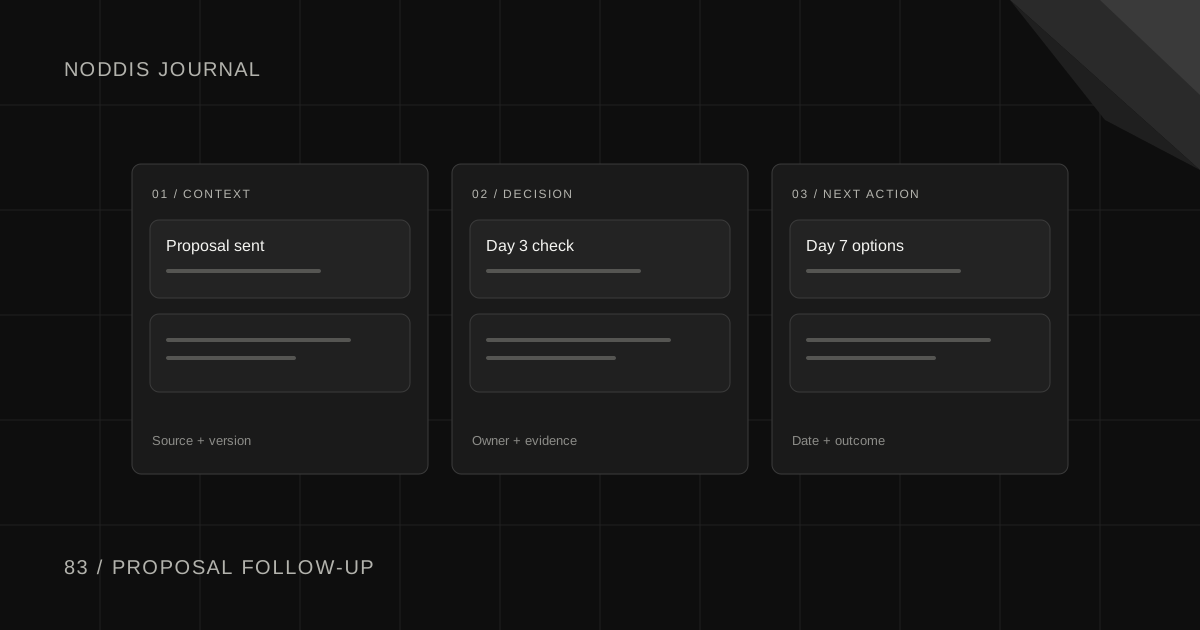
If a client ghosted after a proposal, send three short follow-ups over about two weeks, then stop. The first checks the proposal arrived, the second offers an easy way to say yes, no or not yet, and the third closes the loop politely. Silence often means a stalled decision, not a rejection.
Why has a client ghosted after a proposal?
A client goes quiet after a proposal because deciding is harder than asking for a quote. The proposal lands, the budget conversation happens inside their business, and replying to you slides down the list. Reading silence as a no is a guess.
The common causes are ordinary:
- The decision needs someone else. A partner or a finance lead has not looked at it yet.
- The price was a surprise. They need time to adjust the budget or the brief.
- The project lost urgency. Something more pressing arrived that week.
- They chose someone else. Saying so feels awkward, so they say nothing.
Only the last cause is a no, and a good follow-up makes it easy to say. A clear no is useful. It frees the dates you were holding and lets you stop wondering.
How long should you wait to follow up after sending a proposal?
Wait about three working days for the first follow-up, a week for the second and one more week for the last. That rhythm gives the client room to decide without letting the proposal go stale.
| When | Message | Purpose |
|---|---|---|
| Day 0 | Proposal sent, with an expiry date | Sets the date your price and start date hold until |
| Day 3 | Check it arrived | Catches spam filters and wrong addresses |
| Day 7 | Offer three easy replies | Turns a big decision into a one-line answer |
| Day 14 | Close the loop | Frees your dates and leaves the door open |
Writers who have been through it land on a similar limit. Kate Hamill writes on the Freelancers Union blog, "If a reasonable amount of time has passed (I tend to say a week), send a second follow-up e-mail." Her total is two emails and one short phone call. Three written follow-ups is the ceiling here for the same reason: past that point, more messages add pressure without adding information.
What should a follow-up email after a proposal with no response say?
A follow-up email after a proposal with no response should do one job per message and never ask "did you get a chance to look?" Give the client something specific to answer.
Day 3, check it arrived:
Subject: Proposal for [Project]: did it reach you?
Hi [Name],
I sent the proposal for [Project] on [Day]. Email attachments sometimes go astray, so here it is again: [Link].
The price and the [Month] start date hold until [Expiry date]. Happy to answer questions by email or on a short call.
Thanks,
[Your name]
Day 7, offer three easy replies:
Subject: [Project]: yes, not yet, or no?
Hi [Name],
To make this simple, reply with a number:
1. Yes, send the agreement.
2. Not yet. Check back on [a date you choose].
3. No, we are going another way.
Any of the three helps me plan. If the scope or the budget is the sticking point, tell me and I will suggest a smaller first phase.
Thanks,
[Your name]
Day 14, close the loop:
Subject: Closing the [Project] proposal for now
Hi [Name],
I have not heard back, so I will release the [Month] dates I was holding and close this proposal on [Expiry date].
If the project comes back to life, reply to this email and I will send an updated quote and my next available start date.
Thanks,
[Your name]
The closing message is the first one with a real deadline in it, so send it only if you mean it.
Should a proposal have an expiry date?
Yes. A proposal should state the date until which its price and start date are valid, because both depend on your schedule and neither can stay open forever. Pick a window that matches how far ahead you book, such as two to four weeks.
An expiry date also gives your follow-ups something honest to point at. "The start date holds until Friday" is a fact about your calendar, not pressure. Without one, every follow-up is only a nudge, and a client can come back in four months expecting the same price and an immediate start.
When a quiet client does come back with a yes, put the agreement in writing before any work begins. In New York City that is a legal requirement for freelance work above a set value: the Department of Consumer and Worker Protection says "All contracts worth $800 or more must be in writing." For most projects, that means a signed agreement comes before the kickoff call.
When should you stop following up and move on?
Stop after the third message. Move the contact to a list you check every few months, and give the held dates to other work the same day. Stopping is not giving up on the client. It is ending the part where their silence controls your calendar.
One light check-in a quarter is reasonable if the project was a good fit: a single line with something useful in it, such as a new case study or an opening in your schedule. If they reply, send a fresh quote instead of reviving the old one, since your availability and prices may have changed.
How does Noddis keep open proposals from slipping?
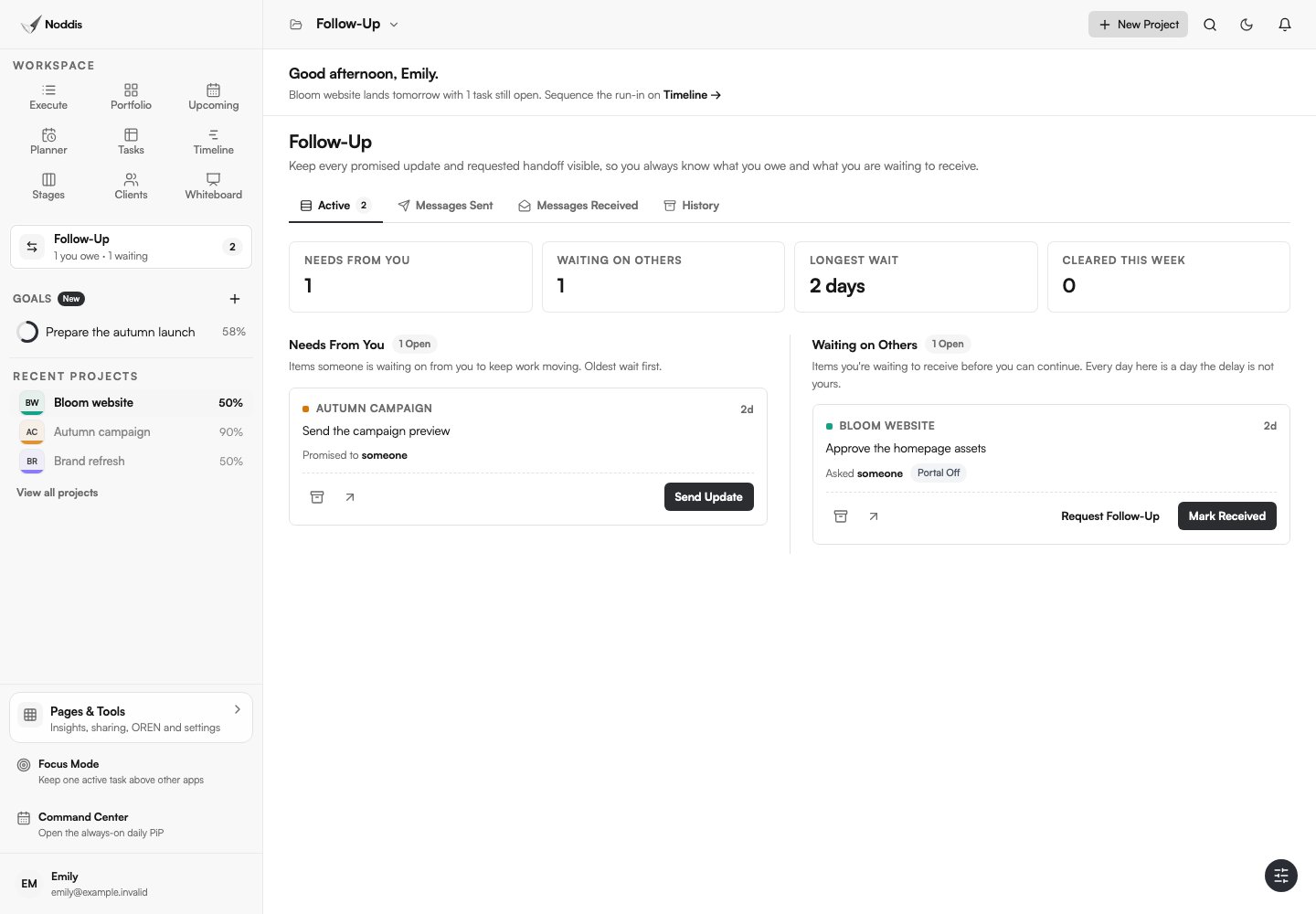
Noddis is a project management app that keeps tasks, follow-ups, and related project details connected. When we built Follow-Up in Noddis, we split it into two lists, Needs From You and Waiting on Others, and gave every open item an age in days.
Keep one project called Proposals, with a task for each quote you send. Mark each task as Waiting on Others for the person who has to decide. The ages show which proposal is at day 3, day 7 or day 14, so the follow-up rhythm runs from a list instead of from memory. Follow-Up works on one selected project on the Free plan, which is enough for a proposals list.
For messages that cover the rest of a project, see the client email templates for freelancers. For a client who goes quiet after the work has started, see what to do when a client is not responding to emails.
Your next step
Add an expiry date to your next proposal and put the day 3, day 7 and day 14 follow-ups in your calendar the moment you send it. To see open items aging in a waiting list, try the live demo.
Common questions
Is it unprofessional to follow up on a proposal more than once?
No. Following up two or three times, spaced several days apart, is ordinary business practice. What reads as unprofessional is frequency and tone: daily messages, guilt, or a new email that only says "bumping this". Keep each follow-up short, useful and easy to answer.
Should I lower my price when a client goes silent?
Not in a follow-up. Dropping the price unprompted tells the client the first number was padded, and it does nothing if price was not the problem. If budget is the obstacle, offer a smaller first phase at a lower total, so the scope shrinks along with the cost.
Should I call instead of emailing?
One call is fine when you already have a phone relationship with the client. A short call around the second follow-up can settle in two minutes what email has not settled in a week. Leave one brief voicemail at most, then go back to email, so there is a written record of the proposal's expiry.

Katleen is the founder of Noddis. She runs client projects through her app studio, 693 Labs, and builds Noddis around the problems that work creates.
Last reviewed . Feature details reflect Noddis at the time of review.