
Short answer
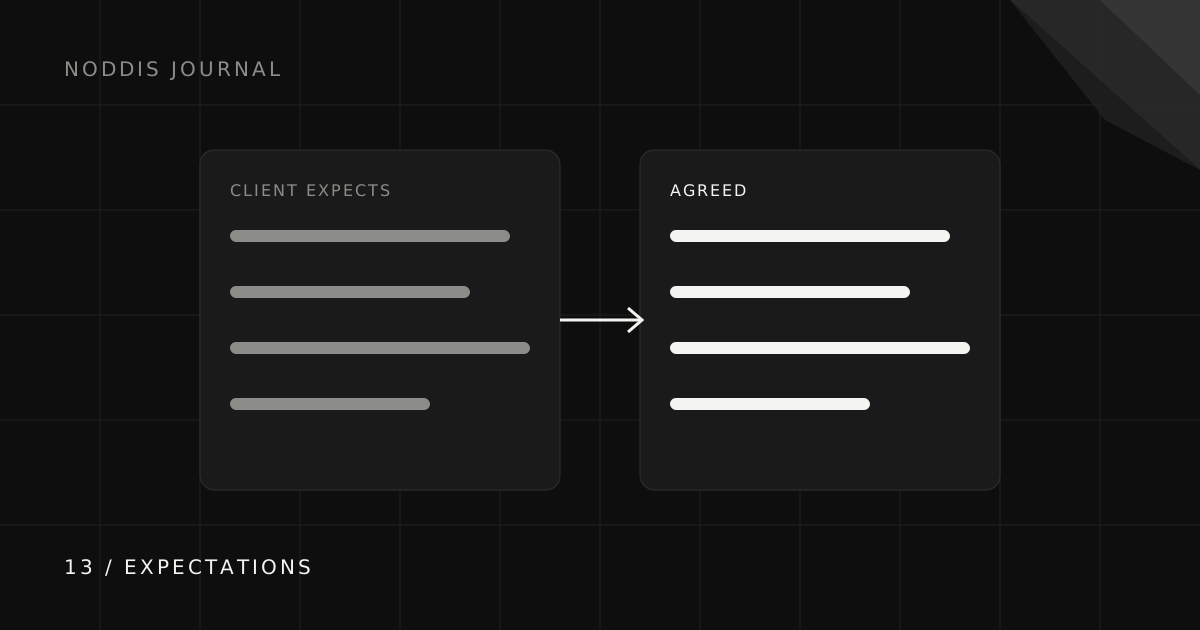
Manage client expectations by making them explicit early and keeping them visible. At kickoff, agree on scope, timeline, feedback rounds, response times, and how changes work. During the project, send a predictable update and give the client one place to check progress. When something changes, tell them before they notice, with the new date, the reason, and the plan.
Why do client expectations drift away from reality?
Client expectations drift because the client builds a mental picture of the project from incomplete information, and the picture is never updated. They imagine the timeline from the proposal, the process from their last vendor, and the result from an example they liked.
Meanwhile, you are working from the real plan. Without regular, visible updates, the two pictures separate a little each week, until a normal milestone feels like a disappointment.
What expectations should you set at kickoff?
At kickoff, set expectations for the five things clients most often assume incorrectly:
| Topic | What to agree |
|---|---|
| Scope | Deliverables and explicit exclusions |
| Timeline | Milestones, plus what moves them |
| Feedback | Number of rounds and turnaround time on both sides |
| Communication | Channel, update day, and response time |
| Changes | How new requests are quoted and scheduled |
Write them into the kickoff summary from the client onboarding checklist, so there is a shared reference later.
How do you keep client expectations aligned during a project?
Keep expectations aligned by updating the client’s picture on a schedule, before they have to ask. Three habits do most of the work:
- A predictable update. Same day each week, same four parts. The status update templates make it a five-minute job.
- One place to check progress. A live view the client can open any time removes most “just checking in” emails.
- Show work in progress early. A rough draft at 30% prevents a surprise at 90%.
How do you reset expectations when something changes?
Reset expectations as soon as you know something has changed, with the new date, the honest reason, and what you are doing about it. Clients forgive delays far more readily than they forgive finding out late.
If the change comes from the client’s side, the same rule applies in reverse: name the new request, its effect on time or budget, and the options. The scope creep guide has scripts for that conversation.
What if a client keeps expecting more than you agreed?
If a client keeps expecting more than you agreed, go back to the written kickoff summary and talk about the gap directly and kindly. Often the client has simply forgotten what was agreed or never read it closely. Point to the document, restate the boundary, and offer a path to what they want, usually a quote or a second phase.
If the pattern continues after that conversation, it is a fit problem rather than a communication problem, and that is worth knowing early.
How does Noddis help keep client expectations visible?
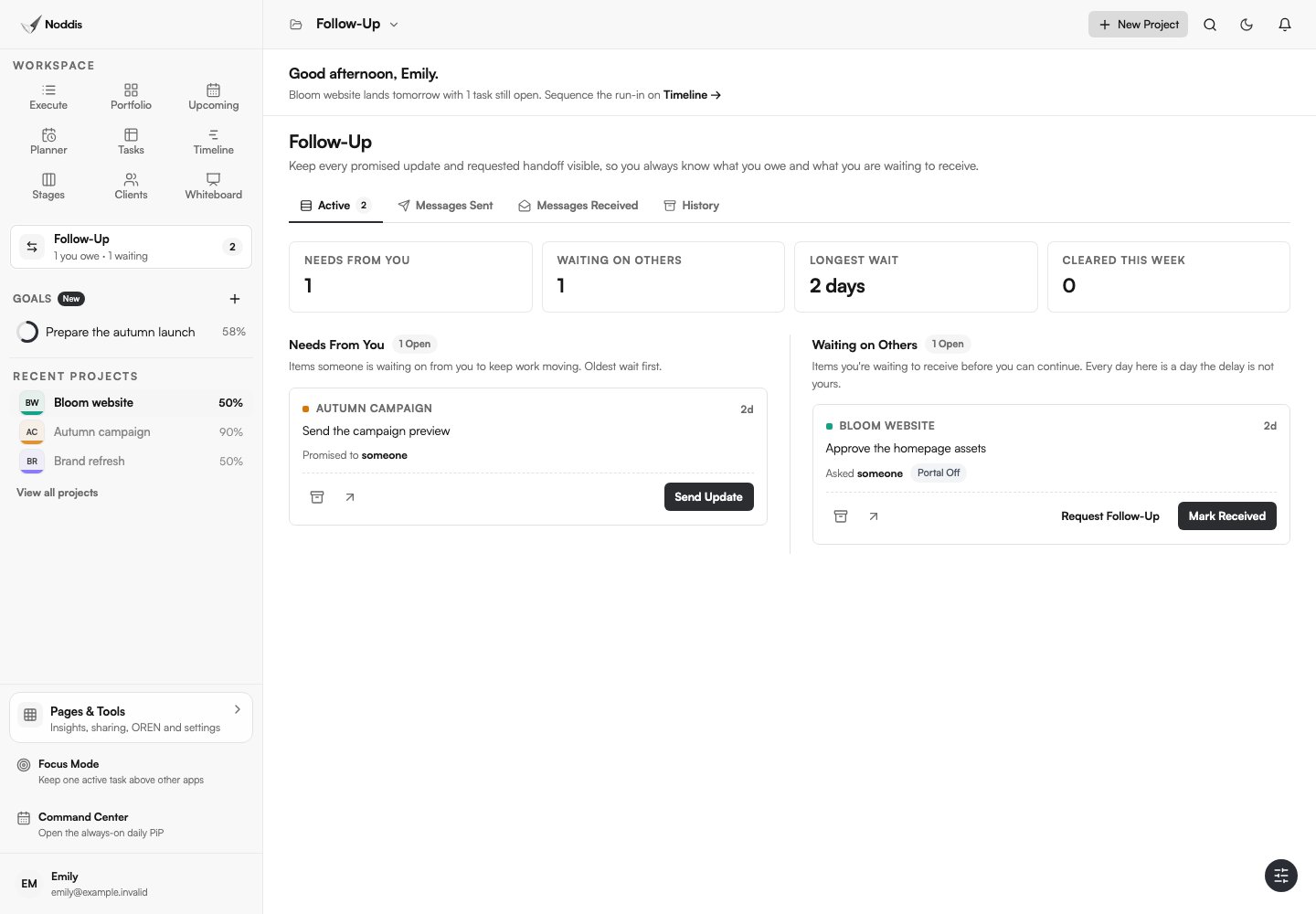
On Pro, configure a Client Portal so the client can check selected project progress without a Noddis account. Keep its underlying tasks and dates current, and send a human explanation when a promise changes.
Noddis Drift measures scope growth against a baseline. Establish the agreed scope, then review additions as client-requested, internal, or unclassified. This gives you a concrete record for a scope conversation. It does not decide that a project is late merely because nothing changed for a few days.
Common questions
How do you set client expectations?
Agree on scope, timeline, feedback rounds, communication rules, and the change process at kickoff, write them down, and send the summary to the client within a day.
How do you deal with a client who expects too much?
Refer back to the written agreement, restate the boundary kindly, and offer a way to get what they want, such as a quote, a swap, or a later phase.
How often should you update a client?
Weekly suits most projects. Consistency matters more than frequency: an update every Friday is more reassuring than irregular bursts.
What is the biggest cause of unhappy clients?
Surprises. A delay, a cost, or a result the client did not expect causes more frustration than the issue itself would if they had known in advance.

Katleen is the founder of Noddis. She runs client projects through her app studio, 693 Labs, and builds Noddis around the problems that work creates.
Last reviewed . Feature details reflect Noddis at the time of review.