
Short answer
Handle scope creep by catching it at the moment of the request: acknowledge the idea, say clearly that it is outside the agreed scope, and offer two options, either a quote and new date for adding it, or a swap for something already planned. Prevent it by writing exclusions into the agreement, logging every new request in one place, and reviewing open requests weekly against the original scope.
What is scope creep?
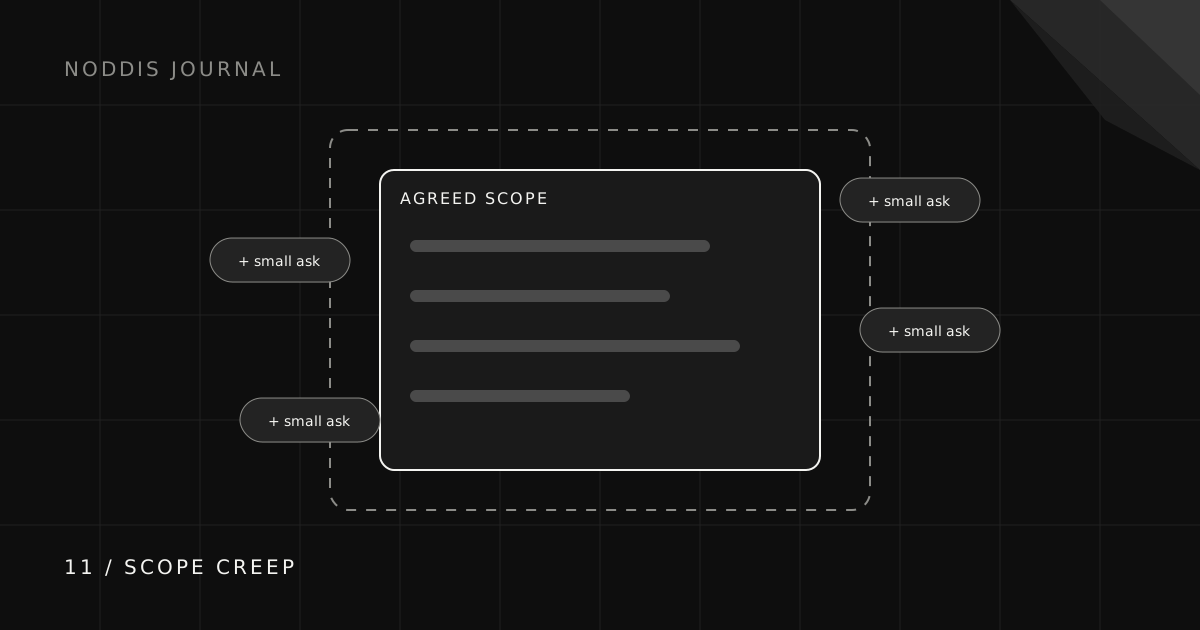
Scope creep is the gradual expansion of a project beyond what was agreed, without a matching change in budget or timeline. It is different from a change request, which is a new piece of work that is quoted and approved before it starts.
The reason it is so common in client work is that each individual ask is reasonable. One more round of revisions, one extra page, one quick export in a different size. Saying yes to each feels like good service. Saying yes to all of them is how a profitable project quietly becomes an unprofitable one.
What are common examples of scope creep?
Common examples of scope creep share one pattern: a request framed as small that adds real time. These show up in almost every kind of client work:
| The request | Why it is scope creep |
|---|---|
| “Can we do one more round of changes?” | Revision rounds were capped in the agreement |
| “While you are in there, could you also…” | New work attached to an approved task |
| “Our CEO wants to weigh in now.” | A new approver restarts decisions already made |
| “Can you just set this up for us too?” | Operational work outside the deliverables |
| “We need it in three more formats.” | Each format is extra production time |
How do you spot scope creep early?
You spot scope creep early by checking every new request against the written scope at the moment it arrives, not at the end of the month when you wonder where the hours went. Three signals are worth watching:
- Requests that begin with “just,” “quick,” or “while you are at it.”
- New people appearing in feedback threads.
- Tasks being added to a project faster than tasks are being finished.
The last one is the most reliable, because it shows up in the data even when every individual request felt minor. It is also one of the early signs of project drift.
How do you respond to scope creep without damaging the relationship?
Respond to scope creep by welcoming the idea, naming the boundary, and offering a choice. Clients rarely mind a clear boundary; what they mind is a surprise invoice or a silent delay.
Script: add it with a quote
Script: swap it in
Script: park it for later
How do you prevent scope creep in the first place?
Prevent scope creep by making the boundaries visible before the work starts and keeping every request in one place while it runs.
- Write exclusions into the agreement. “Not included” is the most useful section of any proposal.
- Cap revision rounds and define what counts as a round.
- Explain the change process at kickoff, as part of the onboarding checklist.
- Log every new request with its source and date, even the tiny ones.
- Review new requests weekly and decide: in scope, quote it, or park it.
How does Noddis help you catch scope creep?
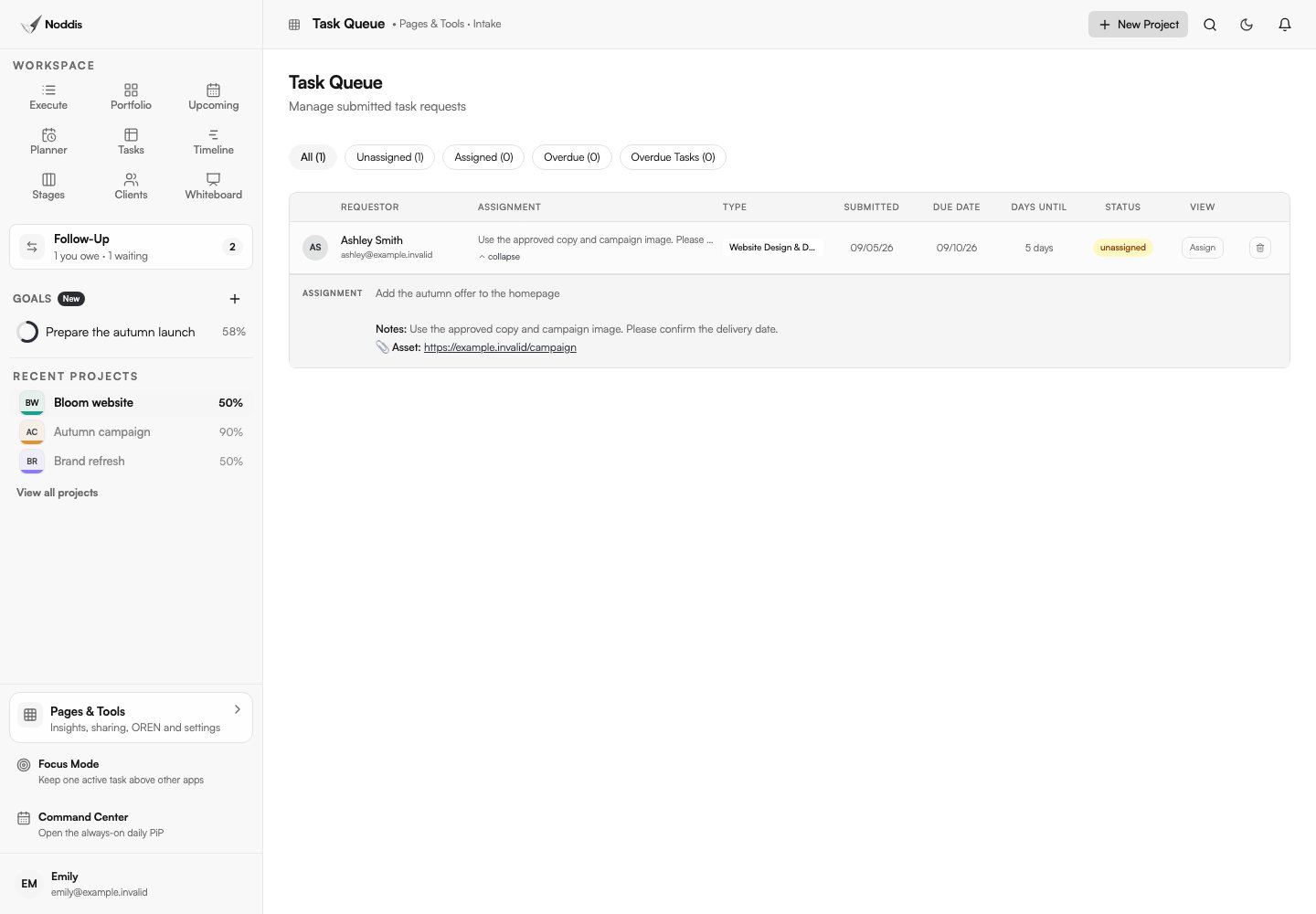
Review new email, text, and Slack requests in Capture Inbox before applying them to a project. That is a useful moment to separate a correction from additional scope.
Noddis Drift measures scope growth against a baseline. Establish the agreed scope, then review additions as client-requested, internal, or unclassified. This gives you a concrete record for a scope conversation. It does not decide that a project is late merely because nothing changed for a few days.
A Pro portal can show selected agreed deliverables, but it is not a contract or automatic scope-approval system. Discuss and record a change explicitly before treating it as approved.
Common questions
What causes scope creep?
Unclear scope in the agreement, no defined change process, new stakeholders joining late, and saying yes to small requests one at a time without tracking their total effect.
Is scope creep always bad?
No. New ideas often make the work better. Scope creep becomes a problem only when added work is not matched by added budget or time, or when it is never discussed at all.
How do I tell a client something is out of scope?
Thank them for the idea, state that it is outside the agreed scope, and offer options: a quote and new date, a swap for planned work, or a later phase. Keep it short and friendly.
What is the difference between scope creep and a change request?
A change request is new work that is discussed, priced, and approved before it starts. Scope creep is new work that slips in without that conversation.

Katleen is the founder of Noddis. She runs client projects through her app studio, 693 Labs, and builds Noddis around the problems that work creates.
Last reviewed . Feature details reflect Noddis at the time of review.