
Short answer
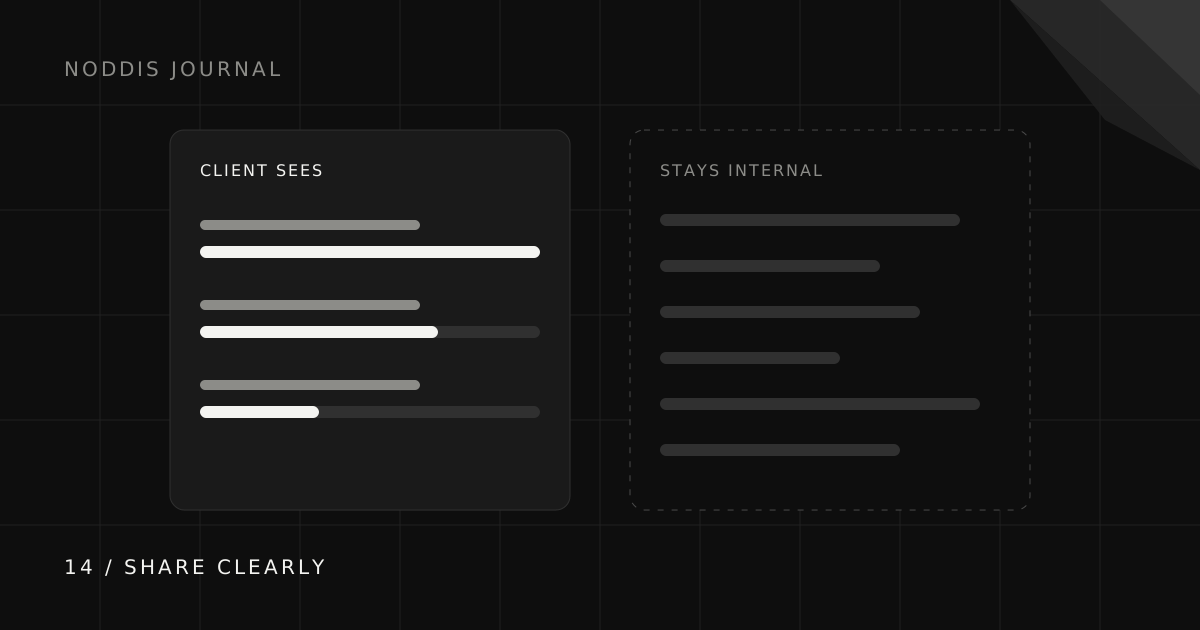
Share agreed deliverables, current status, upcoming milestones, decisions the client needs to make, and anything waiting on them. Keep internal estimates, rough drafts, working debate, and anything about other clients inside your own workspace. The test of good visibility is whether the client can answer “where are we, what is next, and what do you need from me?” without a call.
Why doesn't more access mean better visibility?
When clients are added to an internal board, they inherit all of its noise: shorthand they do not understand, discarded ideas that look like decisions, and task-level detail without the context to read it. The usual result is a flurry of anxious questions about things that were never a problem.
Visibility is not the number of screens someone can open. It is the quality of the answer they can find. A good client view makes progress legible, responsibilities explicit, and the next decision easy to locate.
What does every useful client update answer?
Every useful client update answers four questions, in this order of importance to the client:
- Outcome: what is this project meant to deliver?
- Current state: what is done, in progress, or waiting?
- Next movement: what happens next, and roughly when?
- Client action: is anything needed from them right now?
Put client actions first when they exist. A pending approval belongs at the top of the page, not beneath a detailed history of completed tasks. For a ready-to-use format, see the client status update templates.
How do you keep visibility intact between updates?
Every update should end in a durable record. An email can alert the client, but the decision, the owner, and the next step should also live where the current project state is kept, or the inbox becomes a second, competing source of truth.
When a client replies with a change, split the reply into three things: the approved decision, any new scope question, and the next owned action. That stops a useful conversation from becoming a new hiding place for project truth, and it feeds straight into your follow-up system so that “waiting” never turns into “forgotten.”
Could the client tell what is done, what is next, and what you need from them without reading any of your internal discussion? If yes, the view is doing its job.
When is a client portal better than email updates?
A client portal is better than email updates when clients keep asking for status, because email is good at announcing a moment while a portal is good at holding the current state. When clients keep asking for the latest file, repeat the same status question, or lose decisions in long threads, a shared client view becomes the reference point between messages.
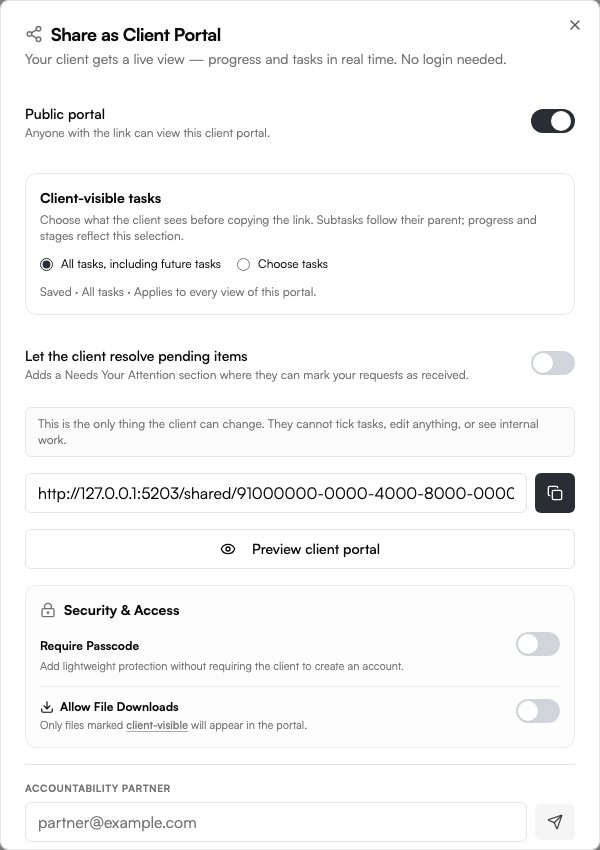
The catch with most portals is the login. Clients forget passwords and stop checking, so the portal goes stale and you are back to writing status emails. Noddis client portals are shared as a link that opens without an account, which is the subject of its own guide.
Common questions
What is client project visibility?
It is a shared, reliable understanding of a project’s progress, milestones, decisions, and responsibilities. It should give the client a trustworthy answer without access to every internal task or note.
Should clients see internal tasks?
Only when those tasks help them understand or advance the agreed work. Most clients need deliverable-level progress and clear requests, not the full operational checklist.
How often should you update clients on a project?
Match the cadence to the project’s speed and what you agreed at kickoff. Weekly written updates suit most projects, while a shared project view should stay current whenever the client checks it.
Is it unprofessional to keep things from clients?
No. Curating what you share is part of the service. You are filtering for relevance, not hiding problems; risks and delays that affect the client should always be shared.

Katleen is the founder of Noddis. She runs client projects through her app studio, 693 Labs, and builds Noddis around the problems that work creates.
Last reviewed . Feature details reflect Noddis at the time of review.