
Short answer
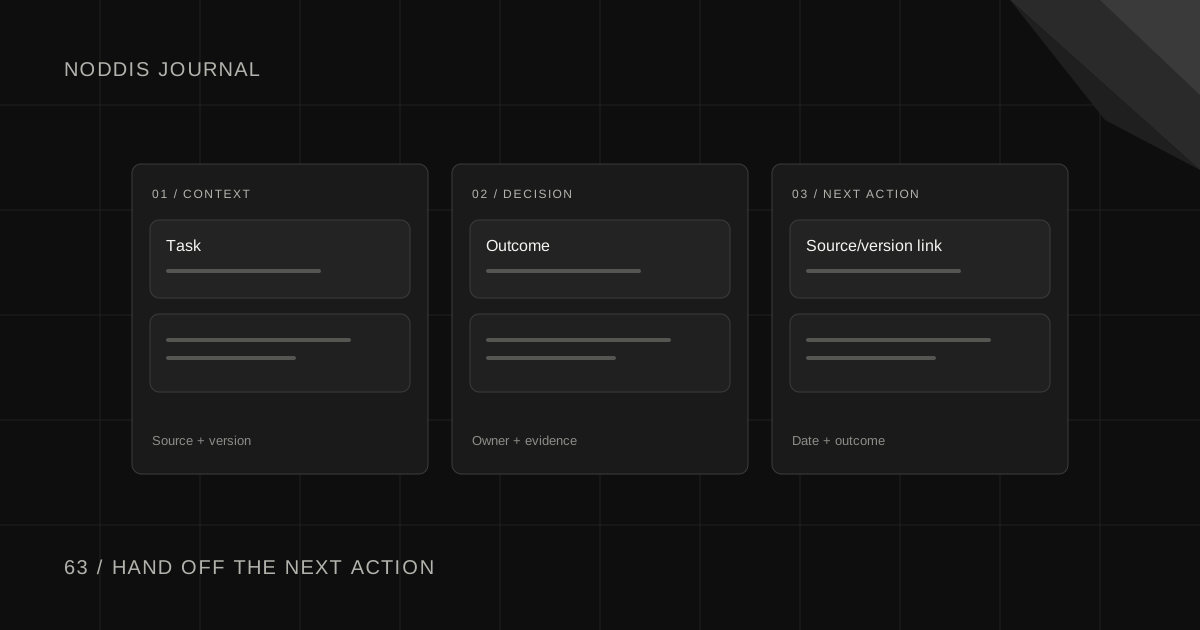
A task handoff checklist gives the next person the context needed to complete work without reconstructing a conversation. Include the outcome, owner, current state, deadline, source links, decision history, and acceptance criteria. A handoff is successful when the recipient can explain what “done” means and identify the next action.
Free resource
Download the blank task handoff spreadsheet. No account is required. Save a copy before adding your project details.
What is a task handoff in remote client work?
A task handoff occurs when responsibility for moving an item forward passes from one person to another. For freelancers and agencies, this may be a designer handing approved screens to a developer, a writer passing copy to an editor, or an account lead giving a client request to a specialist.
Remote teams often rely on asynchronous handoffs, so the recipient may not be online at the same time as the sender. That makes the record more important. A message that says “Please finish the landing page” leaves questions about the approved version, access, scope, deadline, and review owner.
Copyable task handoff checklist
Use this table when work changes hands. Not every simple task needs a long document; high-impact tasks do need enough context to prevent avoidable rework.
| Check | Handoff question | Example answer |
|---|---|---|
| Outcome | What must be delivered? | Responsive landing page |
| Source | Which version is approved? | Layout v3 link |
| Scope | What is included/excluded? | Contact form included; checkout excluded |
| Owner | Who moves next? | Developer |
| Deadline | What date is committed? | Nov 8 |
| Dependencies | What must arrive first? | CMS permissions |
| Acceptance | How will completion be verified? | Form submits and approved layout matches |
| Next reviewer | Who signs off? | Account lead |
The example is fictional. A successful handoff means these fields are accurate, not merely filled in.
What does a poor handoff look like?
Poor: “Build the page from the file I sent. Client wants it ASAP.” The file may be the wrong version, “ASAP” is not an agreed date, and no one knows who approves the finished result.
Useful: “Build the responsive landing page from approved layout v3 [link]. Include the contact form and mobile navigation; checkout is excluded. CMS access is pending from the client's administrator. Deliver staging by Thursday for internal QA. Ask [account lead] for acceptance.”
The second version is longer, but it reduces the number of decisions the recipient must guess. It also identifies the one outstanding dependency before the developer spends time looking for access.
How do you hand off a blocked task?
State the missing prerequisite and who will resolve it, then agree whether the recipient should wait or work on an independent part. Do not transfer a blocker without its next action; that only moves the uncertainty to someone else.
The Atlassian guide to project dependencies explains why linked outputs and handoffs affect the schedule. Use a dependency reference when a delayed upstream item can affect the new owner's deadline.
How do you verify a handoff without another meeting?
Ask the recipient to acknowledge access, outcome, deadline, and any open question. The acknowledgment can be one message: “I have v3, the staging target is Thursday, and CMS access is still pending.” If it reveals a mismatch, correct the record before work proceeds.
For work with high stakes or many unknowns, a short synchronous walkthrough may be more efficient. The checklist should support communication, not become a rule against talking.
What should happen after the recipient finishes?
The recipient provides the completed output and the evidence needed for review, including file links and QA notes. The next reviewer records acceptance or requested corrections. Avoid closing the entire project based only on the handoff task's completion.
The client approval tracking guide explains the later review stage. The project migration guide covers transferring a much larger body of context between systems; this guide is for one work item moving between people.
How can Noddis support task handoffs?
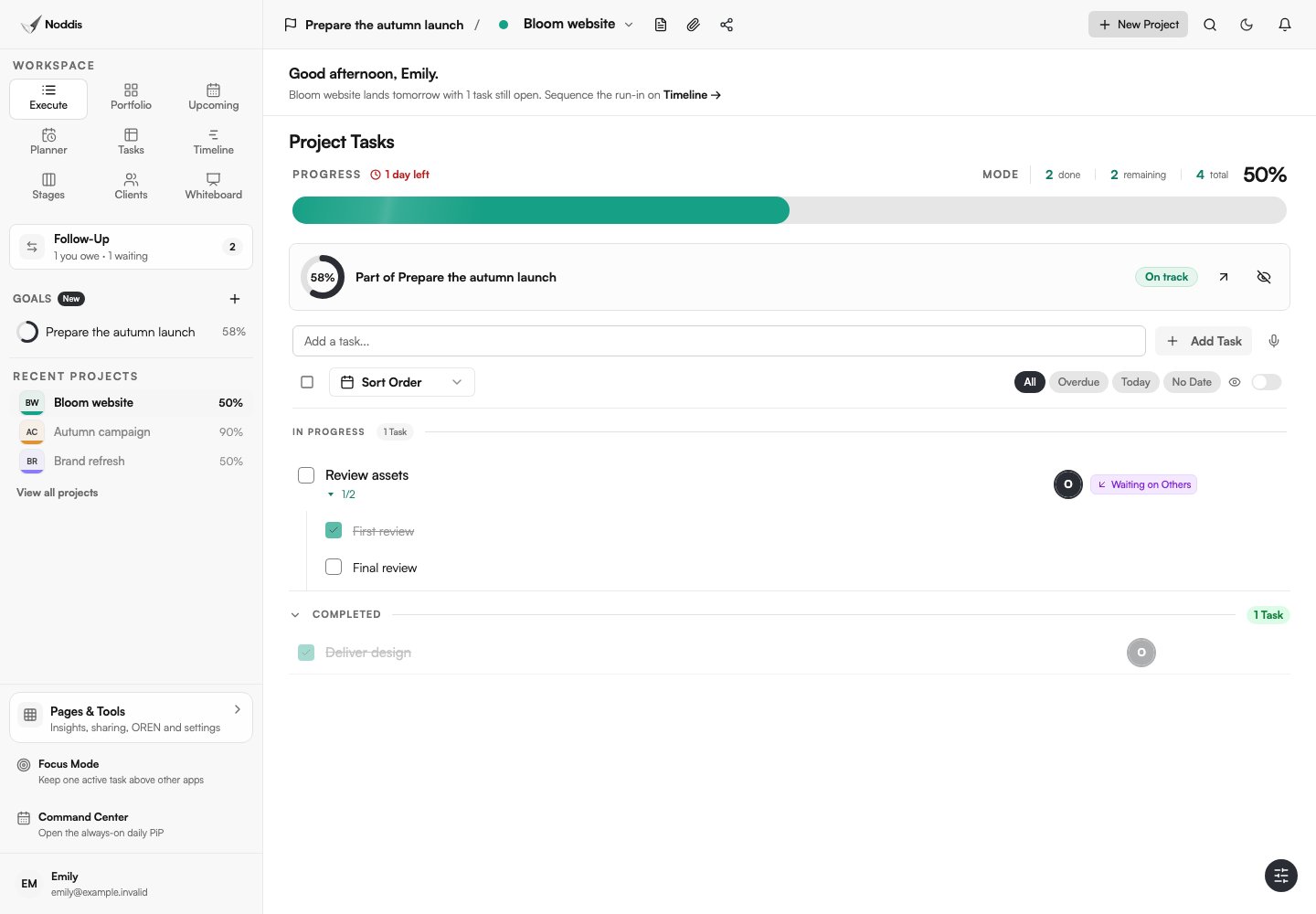
Noddis is a project management app with task nesting, project notes, files, and connected workspaces. Keep the handoff details with the relevant task and use Follow-Up for a response that one person owes another. Check client permissions separately and record sign-off explicitly. Explore the live demo.
Your next step
Paste the checklist into your next collaborator handoff. If the recipient can start work without a clarification call, the structure is doing its job.
Common questions
Is a task handoff the same as delegation?
Delegation assigns responsibility, while handoff provides the context and materials that allow the new owner to proceed. A delegation without a usable handoff may leave the person responsible but blocked.
How much detail should a handoff include?
Enough to define the result, access, constraints, next action, and acceptance. Routine tasks may need a short note; complex client deliverables may need a checklist and linked documentation.
Who is responsible for checking access?
The sender should provide the right links and permissions. The recipient should verify access before beginning. Treat access testing as part of the handoff, not as an assumption.

Katleen is the founder of Noddis. She runs client projects through her app studio, 693 Labs, and builds Noddis around the problems that work creates.
Last reviewed . Feature details reflect Noddis at the time of review.