
Short answer
Client approval tracking means recording what needs a decision, who can make it, which version is under review, when feedback is due, and the outcome. Sending a file is not the same as receiving approval. Keeping those events separate prevents a project from looking finished while its next phase is waiting on a client.
What belongs in an approval register?
| Field | Illustrative entry |
|---|---|
| Deliverable | Homepage design v3 |
| Reviewer | Client marketing director |
| Decision requested | Approve or request changes |
| Date requested | November 3 |
| Requested response | November 6 |
| State | Awaiting review |
| Next action | Follow up November 7 |
| Final decision | Not yet received |
One row should represent one decision, not every email. Attach or link the precise version, so an old “looks good” message cannot be mistaken for approval of a new revision.
Who should approve the work?
Agree on one accountable decision-maker before review begins. Multiple stakeholders can provide input, but someone should consolidate conflicting comments. If several signatures are required, track them separately instead of treating group silence as consensus.
What should an approval request say?
Specify the deliverable, version, decision requested, deadline, and what happens next. For example:
Please review homepage layout v3 and reply with either “approved to proceed” or one consolidated list of changes by Thursday. This review covers layout and content placement. If you need more time, let me know so we can revisit the schedule.
That is more actionable than “Any thoughts?”
What happens when feedback is late?
Use an escalation sequence: a friendly reminder, a clear explanation of which milestone is affected, then a documented schedule decision. Do not quietly assume approval or silently extend the project. If the agreement contains specific review terms, follow them.
How do you distinguish revisions from new scope?
Compare each requested change with the agreed deliverable and revision allowance. A typo correction may be included; an additional landing page may be a new deliverable. Record the classification and obtain agreement before doing additional work.
How does Noddis fit?
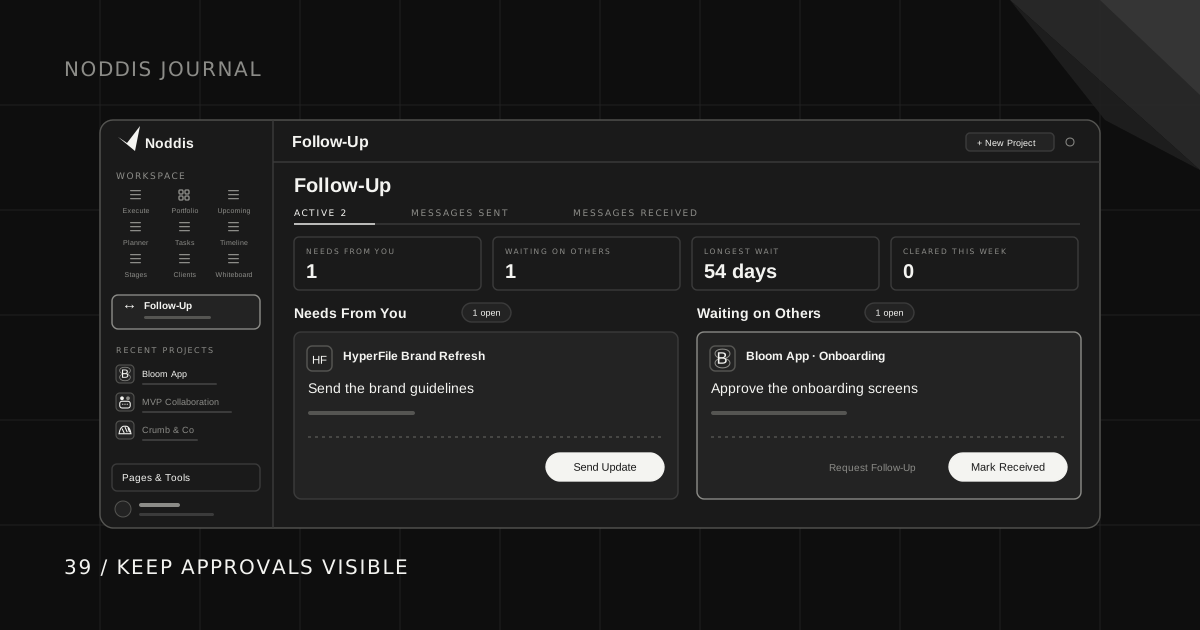
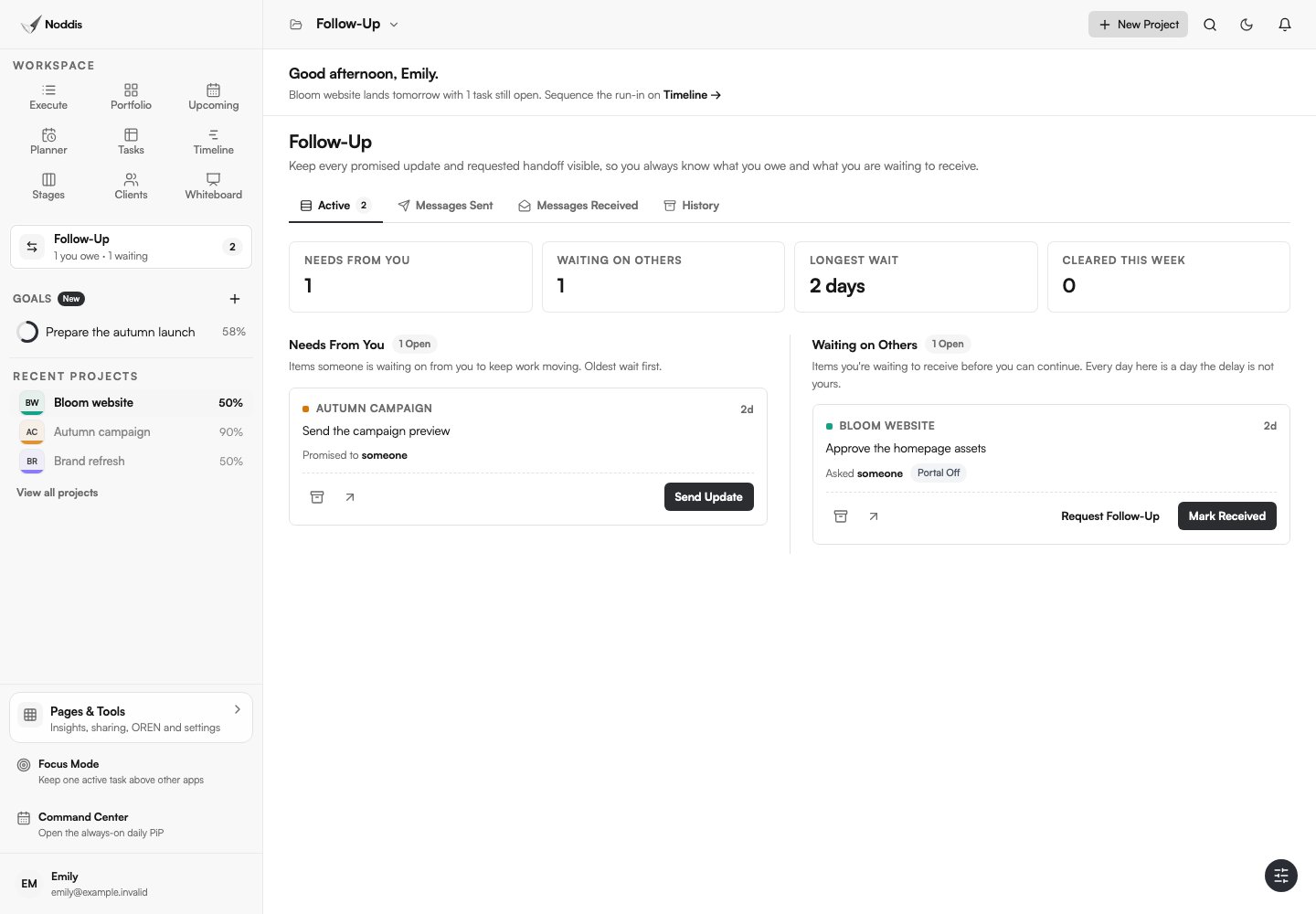
Noddis Follow-Up records task-linked commitments as Needs From You or Waiting on Others. For a client review, record what you are waiting to receive and the follow-up date, and keep the exact file link and decision in the task's notes. The approval register in this guide is a workflow you maintain; it is not a dedicated versioned proofing or signature feature.
A configured Pro client portal can show selected project content and, when enabled, items needing client attention. A progress percentage or a resolved follow-up does not establish that every deliverable has been accepted. The follow-up guide explains the distinction between closing a commitment and completing the underlying work. Try the live demo with sample work.
A complete approval workflow
Use a simple sequence: ready for review → sent → feedback received → revision needed or approved → decision recorded. Each approval should point to the exact deliverable and version. Sending a file is not the same as obtaining approval, and receiving approval does not automatically mean the entire project is finished.
Imagine a homepage design sent to a client's marketing lead. A second stakeholder sends comments in a separate email. Instead of acting on contradictory threads, the project owner asks the designated approver for one consolidated response and records the decision against the reviewed version.
Sample approval register
| Deliverable | Version | Approver | Response due | State | Next action |
|---|---|---|---|---|---|
| Homepage | v2 | Marketing lead | Thursday | Awaiting | Follow up Friday |
| Pitch deck | v1 | Founder | Friday | Revisions | Consolidate edits |
| Brand guide | v3 | Director | Friday | Approved | Save sign-off |
Illustrative example. Include a direct link to the exact file. A version number alone is not enough when several copies circulate.
Copyable approval request
Subject: Approval needed: Homepage design v2 by Thursday
Hi [Name], the updated homepage is ready at [link]. Please review the layout, copy, and mobile version. Could you reply by Thursday with either approved or one consolidated list of changes? If you need more time, let me know so we can adjust the next milestone. Thanks!
This makes the requested decision explicit. It is more actionable than asking “Any thoughts?” and avoids treating silence as consent.
When feedback is late
First check that the link works and the request reached the right person. Then send a short reminder explaining the next milestone affected. If feedback remains outstanding, propose a new review date and record any resulting schedule change. Record an explicit response instead of converting a missed deadline into an approved status.
What to measure
Count decisions waiting for approval, how long they have waited, and how often feedback is split across channels. If one deliverable repeatedly cycles through revisions, revisit its acceptance criteria. In Noddis, Follow-Up can track the task-linked item under Waiting on Others with a follow-up date; resolving it remains separate from completing the deliverable. Treat these review metrics as your own checks, not an automatic approval analytics report.
Common questions
Is “sent to client” an approval status?
No. It records delivery or a review request. Keep “awaiting review,” “changes requested,” and “approved” distinct.
What if stakeholders disagree?
Ask the client for a consolidated decision from an authorized reviewer. Record resulting changes to scope and timing.
Can a deadline make silence count as approval?
Do not mark a deliverable approved merely because the requested reply date passed. Agree on the review process in advance and record the client's decision against the exact version.

Katleen is the founder of Noddis. She runs client projects through her app studio, 693 Labs, and builds Noddis around the problems that work creates.
Last reviewed . Feature details reflect Noddis at the time of review.