
Short answer
Lightweight project management keeps five things visible for every piece of work: the outcome, the next action, one owner, dates that mean something, and anything blocking movement. Everything else is optional. Keep it all in one shared place, capture updates where the work happens, and review exceptions rather than asking anyone to maintain reports about the work.
What does “project management without the management” mean?
“Project management without the management” does not mean removing structure. It means removing the duplicate effort that structure usually demands. A project should become easier to understand as the work happens, not only after someone updates a separate reporting layer about the work.
If you run several client projects, you already know the feeling: an hour of real work followed by twenty minutes of moving cards, updating statuses, and rewriting the same news into an email. That second activity has a name, and it compounds.
What is coordination debt?
Coordination debt is the accumulated cost of keeping work organized rather than getting it done. Like financial debt, it accrues interest quietly, and it leaks out in four places:
- Attention: the mental load of remembering who is waiting on what.
- Momentum: the restart cost every time you switch projects and rebuild context.
- Margin: unbilled hours spent on status updates, chasing, and reformatting.
- Trust: the client’s confidence, which drops every time they have to ask where things stand.
A good system pays this debt down automatically. A bad one adds to it with every field you are asked to fill in.
Which five rules keep a system lightweight?
Five operating rules keep a project system lightweight enough to maintain:
- One project, one home. Tasks, decisions, files, and client context should be reachable from the same place.
- Every open item has a next action. “Homepage” is a topic. “Send homepage v3 for approval” is work.
- One owner per action. Many people can collaborate, but the next move needs one name.
- Dates must mean something. Use a date for a commitment, a dependency, or a review, not to make every task look scheduled.
- Review exceptions, not everything. Spend the weekly review on blocked, drifting, or newly promised work.
What is the minimum viable project workflow?
The minimum viable project workflow has five states: captured, ready, in motion, waiting, and done.
| State | Question it answers |
|---|---|
| Captured | What outcome was requested? |
| Ready | What is the next action, the owner, and a useful date? |
| In motion | What changed, and is anything blocking it? |
| Waiting | Who or what are we waiting on, and when do we follow up? |
| Done | What visible outcome closed the loop? |
Add stages only when the work demands them. Start with enough state to make responsibility and movement obvious.
How do you choose simple project management software?
Test it on a real project, not a sample board with three cards. During the trial, ask:
- Could someone understand the current state without a tour?
- Can you capture a client request without rebuilding the project?
- Can you see blocked work and follow-ups across every client at once?
- Does one update improve every relevant view, or do you enter it twice?
- Can a client see what they need without seeing everything?
Some configuration is normal. The warning sign is when configuration becomes the main activity required before useful work can begin.
How do you adopt a lighter system without a migration project?
Start with one active project with a real deadline. Add only current deliverables, owners, next actions, and dates that represent actual commitments. Run your next weekly review from it and close duplicate notes as you go. Add the next project only once you can answer “what is blocked?” and “what happens next?” without a separate report.
Archive old material deliberately, but do not let archival completeness become the price of getting started.
How is Noddis built around this idea?
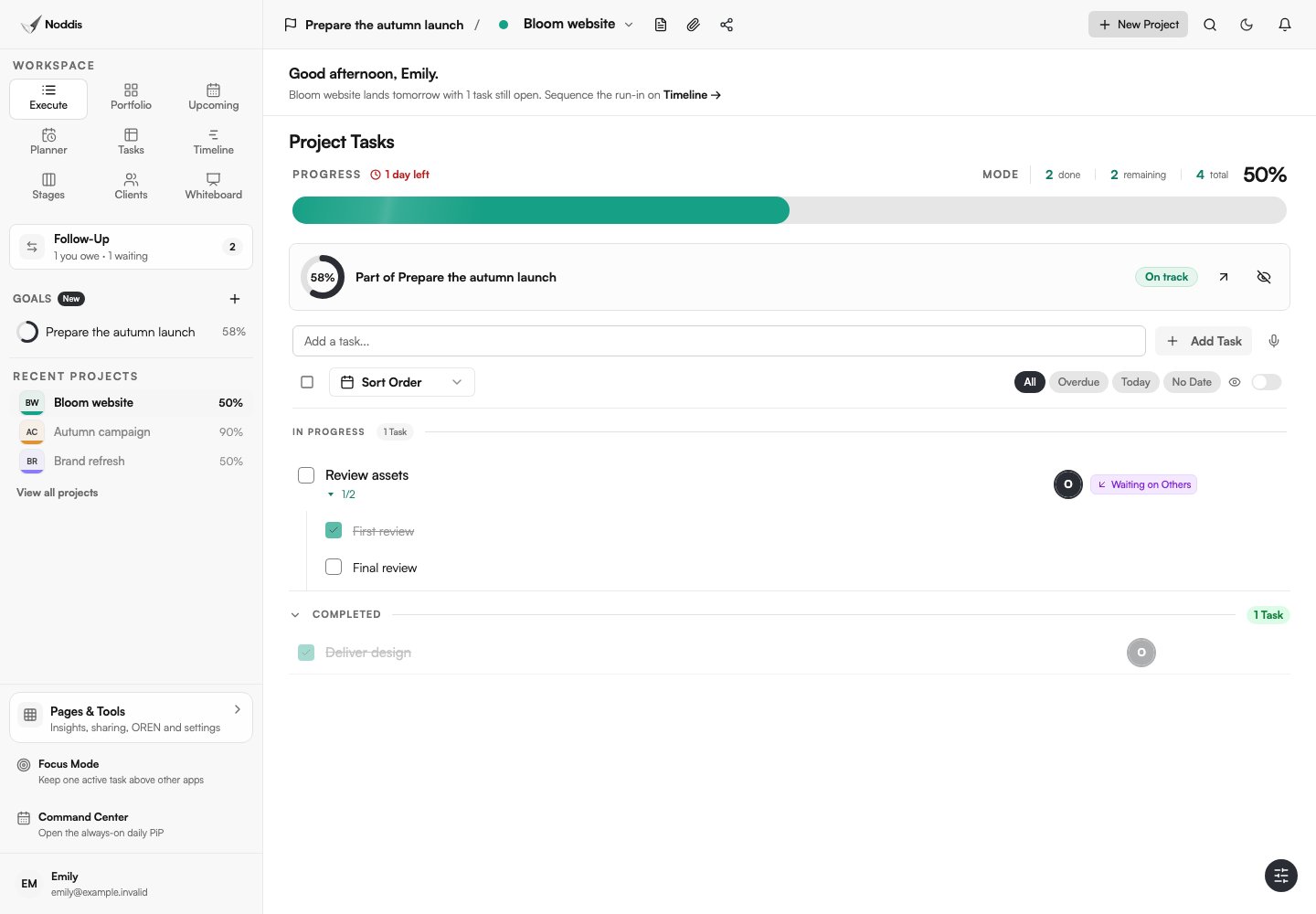
“Project management without the management” is the line Noddis, a project management app built around client work, was built on. Tasks, clients, follow-ups, and history stay connected, so the system can surface what matters now, who has the next move, and where work is drifting, instead of asking you to assemble that picture yourself.
Each workspace exists to remove a specific piece of coordination debt. The workspace guide walks through what each one is for.
Common questions
What is the simplest project management system that works?
One shared place that records the outcome, the next action, the owner, meaningful dates, and blockers for each piece of work, and that separates active work from work waiting on someone else.
What is coordination debt?
Coordination debt is the accumulated time and attention spent organizing work instead of doing it: status updates, chasing replies, rebuilding context, and reformatting the same information for different people.
How do you reduce project management admin?
Remove duplicate updates, use fewer and more meaningful statuses, capture information where the work happens, and review exceptions instead of rebuilding full reports.
Do I need project management software if I work alone?
You need shared visibility once work spans several clients or concurrent deadlines, even if the only other person is the client. Software helps when it reduces the effort of keeping that visibility, not when it adds to it.

Katleen is the founder of Noddis. She runs client projects through her app studio, 693 Labs, and builds Noddis around the problems that work creates.
Last reviewed . Feature details reflect Noddis at the time of review.