
Short answer
A freelancer project closeout checklist helps you finish an engagement without leaving unresolved approvals, missing source files, unclear access, or open client promises. Closeout happens after delivery: confirm acceptance, hand over agreed assets, settle operational details, document final decisions, and give the client a clear next point of contact.
Free resource
Download the blank project closeout spreadsheet. No account is required. Save a copy before adding your project details.
What should a freelancer project closeout checklist include?
A useful checklist covers four areas: final acceptance, file handoff, access and maintenance, and business closure. Use it to catch omissions, not to create work that was never part of the agreement.
This checklist applies to design, content, consulting, and website projects. Adapt the technical handoff items to the actual deliverable and the terms you agreed.
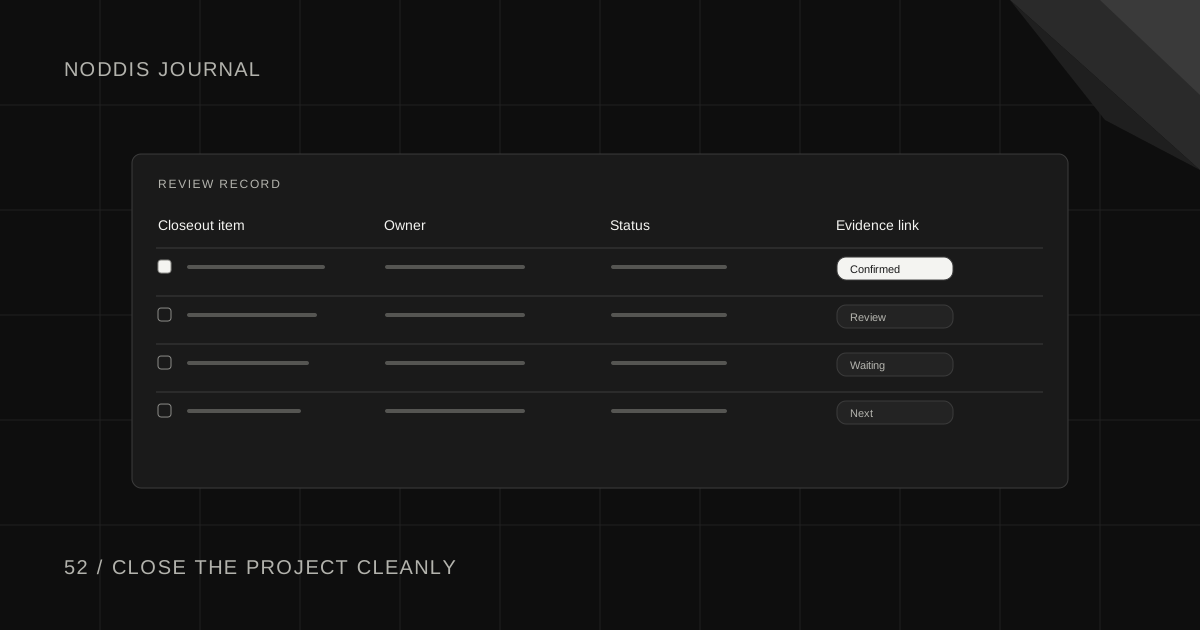
| Stage | Closeout check | Completion evidence |
|---|---|---|
| Acceptance | Approved final deliverable and version | Written client decision |
| Content | Final copy and licensed assets delivered | Shared file list |
| Files | Native sources and exports supplied if included | Handoff folder verified |
| Access | Client has owner/admin access as agreed | Permission test |
| Access | Temporary collaborator access reviewed | Access checklist |
| Outstanding work | Exceptions and future requests identified | Open-items list |
| Commercial | Final invoice and payment terms confirmed | Invoice record |
| Learning | Internal lessons and reusable components saved | Internal closeout note |
| Communication | Client received final summary | Sent handoff message |
The table is a reusable checklist, not evidence that any client has completed these steps.
What belongs in a good client handoff packet?
A handoff packet answers five questions: What was delivered? Which version is final? Where are the files? Who controls access? What should the client do next?
For a fictional Orbit Bikes site, the packet might include a page list, final design source links, the published website address, an administrator-permission check, instructions for routine content updates, and a list of issues that were explicitly excluded or deferred.
Use a folder structure a new colleague could understand:
Orbit-Bikes-Project/
  01-Final-Deliverables/
  02-Approved-Copy/
  03-Source-Files/
  04-Handoff-Notes/
  05-Signoff-and-Change-Records/
Do not copy confidential credentials into the folder. Transfer ownership through supported account-invitation and access processes. The OWASP authorization guidance reinforces restricting permissions to what is necessary.
How do you close unresolved items without hiding them?
Make an open-items list before archiving. Categorize each item as required correction, approved post-launch task, deferred request, or out-of-scope work. Give it an owner and a next date or an explicit closed decision.
For example, the client may approve the new site but postpone replacing three staff photographs. If those placeholders were agreed, record the decision. If the placeholders violate acceptance criteria, do not call the deliverable unconditionally accepted.
The client approval tracking guide explains why a completed task and an approved result must be tracked separately.
What should the final project email say?
A final message should summarize the delivered outcome and provide a link to the handoff packet, not resend the entire project history. Include maintenance and future-request instructions, plus any agreed support period.
Subject: [Project] final handoff and next steps
Hi [Name],
The final [deliverables] are ready at [handoff link]. The approved version is [version/date], and the project acceptance record is [link or reference].
Your folder contains [short file list] and the agreed access information. The only remaining items are [none / list with owners and dates]. For future changes, please use [agreed request process].
Thank you for working with us on this project.
[Your name]
Do not promise ongoing support or warranty coverage if it was not included in the agreement.
What should you keep internally after the project ends?
Retain the agreed scope, approved changes, final decision links, deliverable locations, essential project contacts, and a short lessons-learned note according to your retention and privacy policies. You do not need to preserve redundant copies of everything forever.
Record one or two lessons that can change the next project: a missing asset type, an underestimated review step, or a better handoff sequence. These are operational improvements, not client blame.
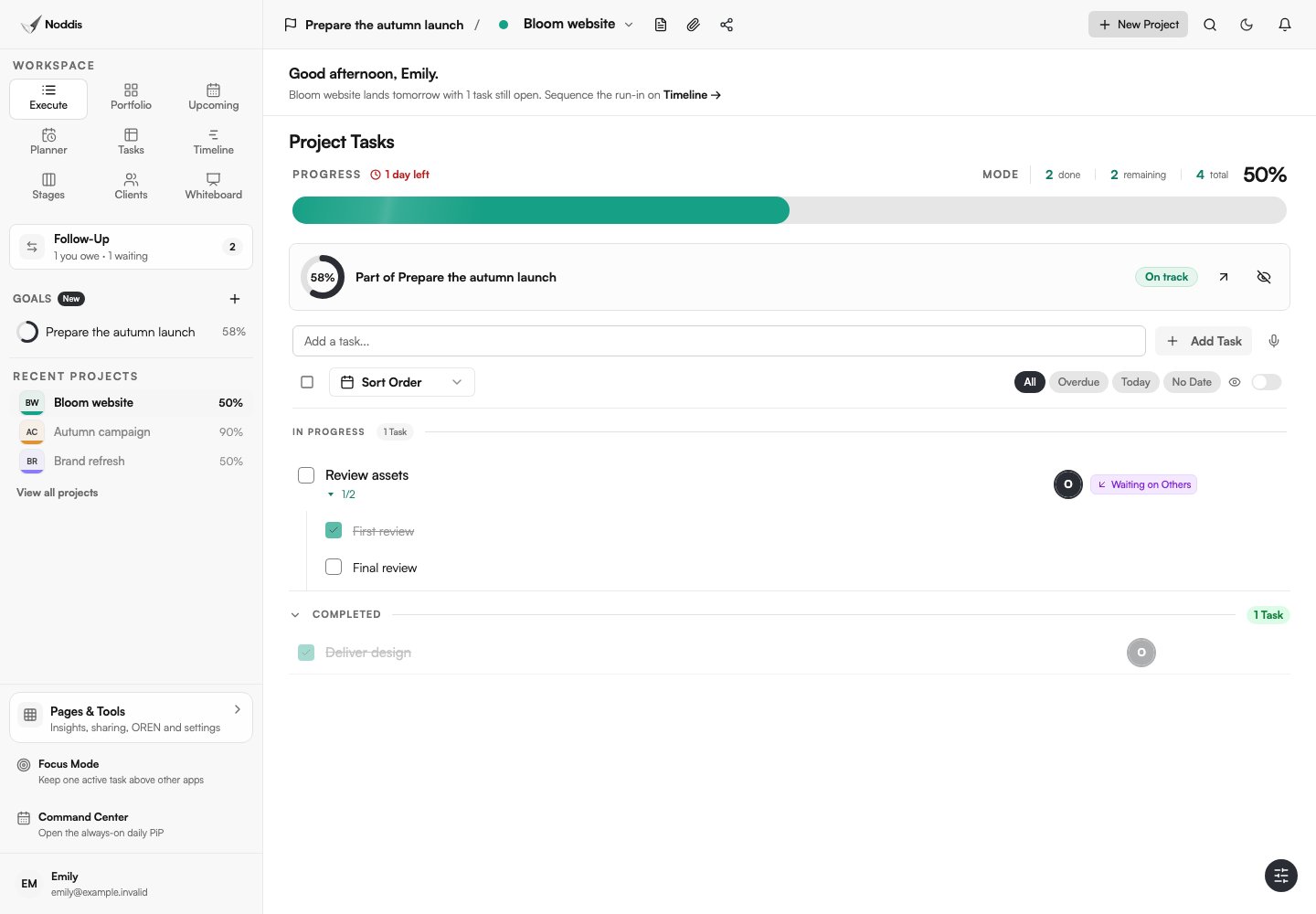
Noddis is a project management app that keeps projects, tasks, notes, and follow-up commitments connected. Resolve open commitments deliberately, retain needed project context, and keep future requests separate from completed work. Its project migration guide can help when moving records to a long-term home. The live demo illustrates the connected workspace approach.
Your next step
Use the checklist on the next project you finish. The real measure of a successful closeout is whether the client can use the work without coming back for missing information.
Common questions
When should you close a freelance project?
Close it when agreed deliverables and acceptance requirements are satisfied, handoff is complete, and outstanding exceptions have a clear disposition. The end date alone does not confirm those conditions.
Should I delete a finished project from my PM tool?
Usually retain an appropriate archive when contractual, privacy, and operational needs justify it. Remove unnecessary sensitive material in accordance with your retention commitments. An archive can help answer future questions about what was approved.
Is a testimonial request part of closeout?
It can be, but it should be optional, honest, and separate from acceptance or payment. Ask for permission before publishing a client's name or deliverables, and do not imply endorsement if one was not given.

Katleen is the founder of Noddis. She runs client projects through her app studio, 693 Labs, and builds Noddis around the problems that work creates.
Last reviewed . Feature details reflect Noddis at the time of review.