
Short answer
Context switching is the time and attention lost every time you move from one task or project to another, mostly spent rebuilding what you knew before you left. Reduce it by grouping similar work across clients, giving each client protected blocks of time, writing a next-step note before every switch, keeping each project’s context in one place, and checking messages at set times instead of continuously.
What is context switching?
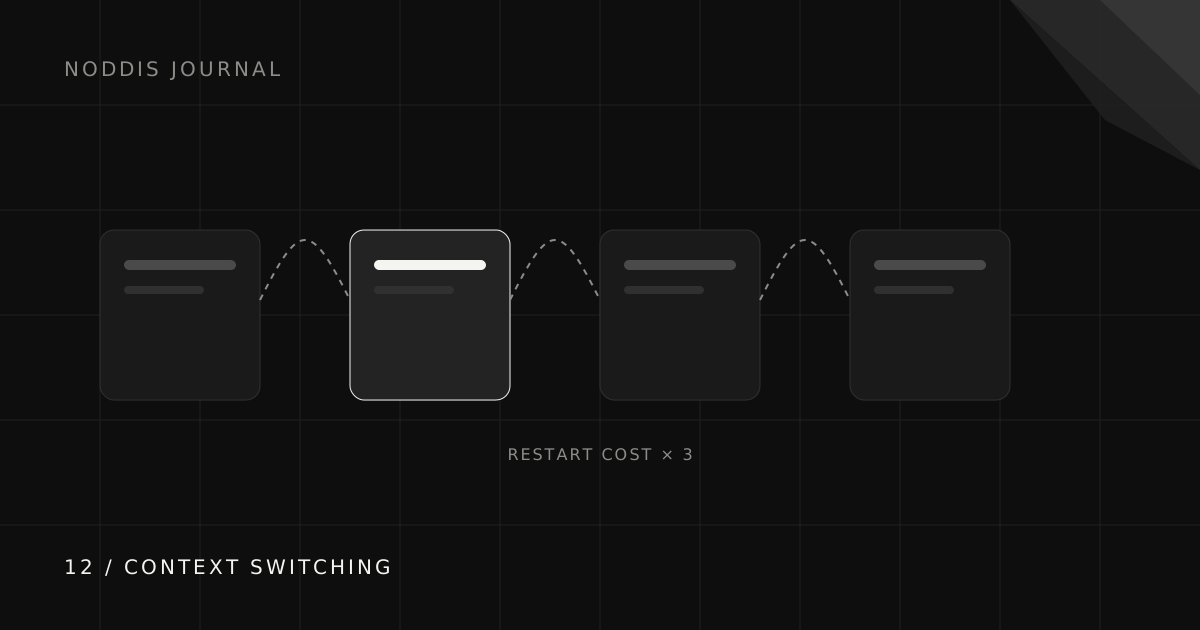
Context switching is shifting your attention from one task to another, and it carries a restart cost: the time it takes to reload what the new task requires. When you move from Client A’s website to Client B’s brand guidelines, you have to recall decisions, find files, reread the last message, and remember what you promised.
Researchers have studied the effect for decades under names like task switching and attention residue, the idea that part of your mind stays on the previous task after you move on. You do not need a study to recognize it, though. It is the feeling of having been busy all day and finished very little.
Why is context switching worse when you manage several clients?
Context switching is worse with several clients because each client carries a separate set of context: different people, different decisions, different tools, and different promises. Switching between two tasks in one project reuses most of what is in your head. Switching between clients often reuses almost none of it.
Messages make it worse still. An email from Client C in the middle of a deep block for Client A pulls you across the whole gap and back again, often for something that could have waited two hours.
How do you reduce context switching?
Reduce context switching by making each switch rarer and each restart cheaper. These six habits do both:
- Protect client blocks. Give deep work for one client at least 90 minutes without other clients in it.
- Batch shallow work across clients. All approvals in one sitting, all follow-ups in another.
- Write a next-step note before every switch. One sentence: what you were doing and the next physical action.
- Keep each project’s context in one place. Files, decisions, and messages reachable from the project, not scattered across apps.
- Check messages at set times. Tell clients when you respond, and keep that promise.
- Plan the day across all clients at once. A short morning sweep prevents the reactive zigzag. The multi-client guide has the full routine.
What should a good next-step note say?
A good next-step note says what you were in the middle of, the very next action, and anything you were about to forget. It takes thirty seconds to write and can save ten minutes of rereading when you return.
How does Noddis reduce the cost of switching between clients?
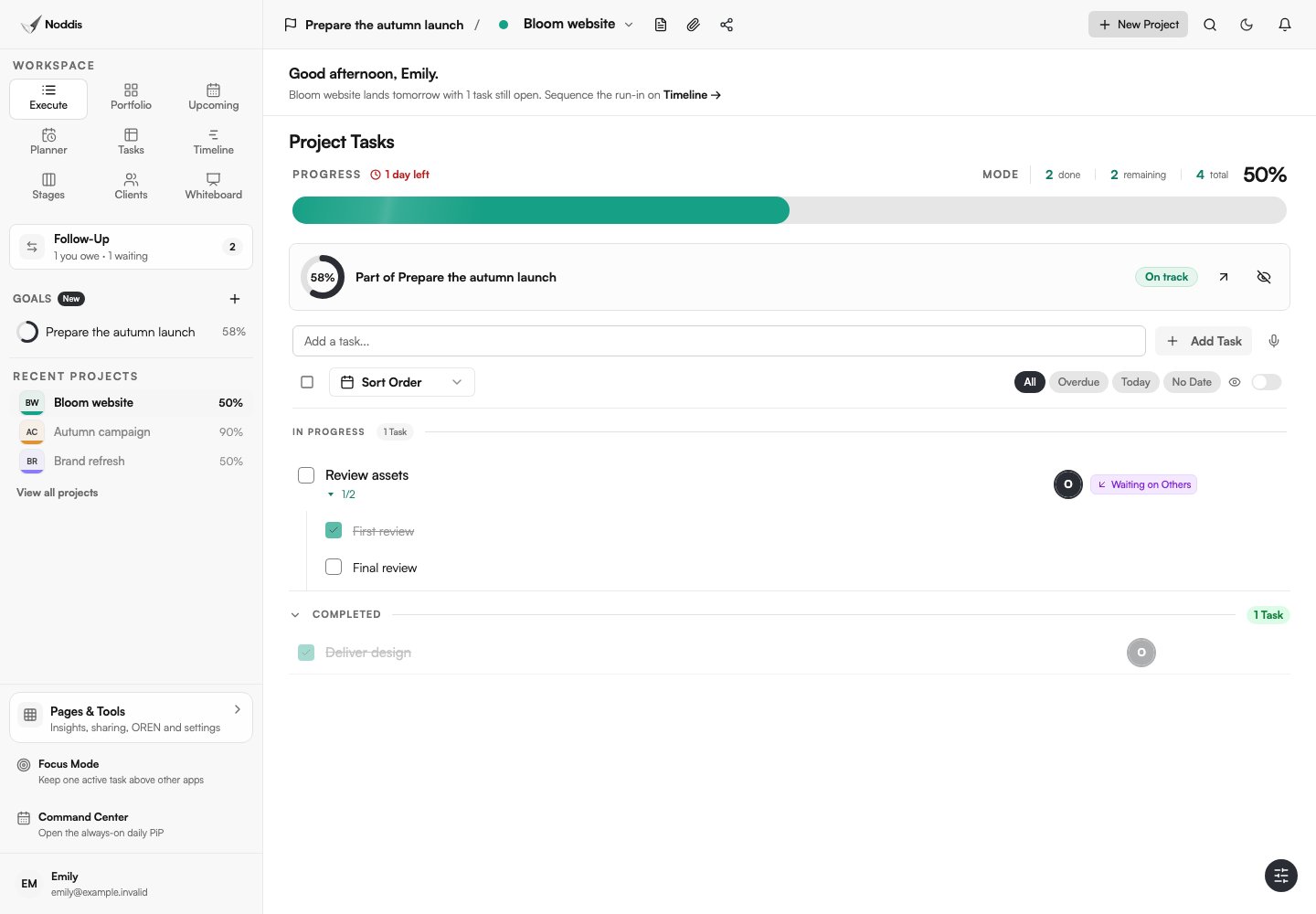
Keep the next-step note alongside its project tasks, files, and commitments. Portfolio helps you choose which project gets the next block; Execute is where you work on that selected project.
Use Nodes when stored relationships need inspection. For simple work, a clear task and a short note may be enough. The point is to shorten the restart, not to open every tool on every switch.
Common questions
How much time does context switching waste?
It varies by person and task, but the cost comes from rebuilding context after each switch, so it grows with how many different projects you touch in a day and how often messages interrupt you.
Is multitasking the same as context switching?
In practice, yes. What feels like multitasking is usually rapid switching between tasks, with a small restart cost each time.
How do I reduce context switching as a freelancer or VA with many clients?
Group shallow tasks across clients, protect long blocks for one client at a time, write a next-step note before switching, and check messages at set times you have told clients about.
What tools help with context switching?
Tools that keep each project’s tasks, files, and history in one place help most, along with a single cross-project view for planning the day.

Katleen is the founder of Noddis. She runs client projects through her app studio, 693 Labs, and builds Noddis around the problems that work creates.
Last reviewed . Feature details reflect Noddis at the time of review.