
Short answer
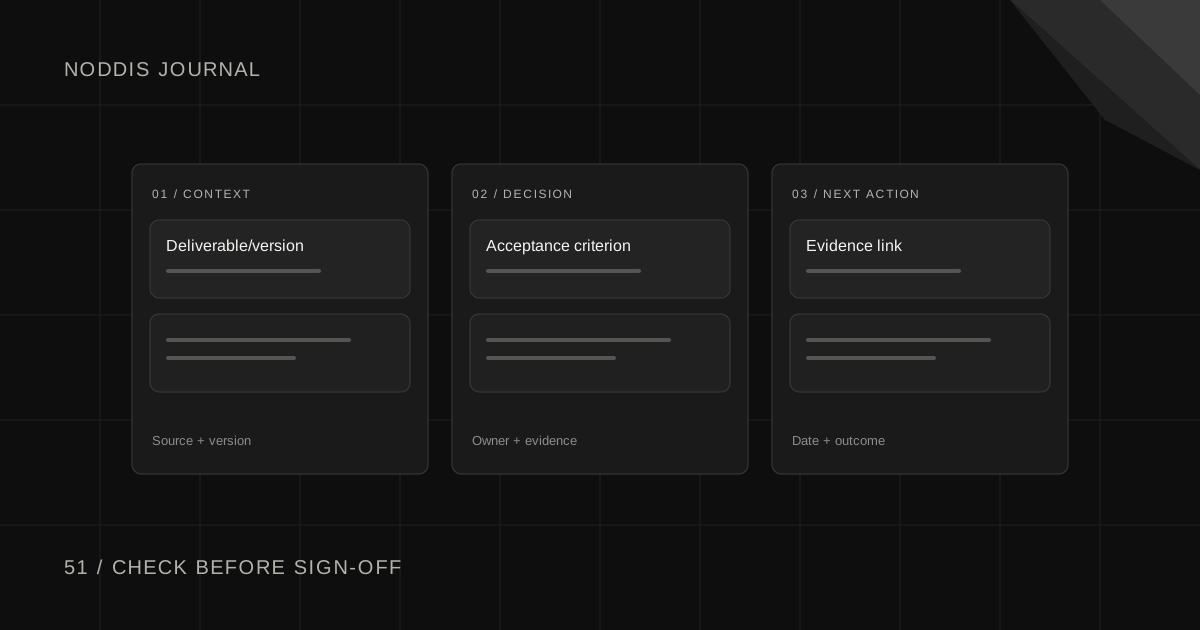
A client deliverable acceptance checklist confirms whether the final work meets agreed requirements and is ready for the client to sign off. It should reference the approved scope, identify the exact version, test acceptance criteria, list outstanding exceptions, and record the authorized decision. A completed task list does not prove the client accepted the deliverable.
Free resource
Download the blank deliverable acceptance spreadsheet. No account is required. Save a copy before adding your project details.
What does client deliverable acceptance mean?
Acceptance means the designated reviewer agrees that a particular deliverable meets the agreed criteria, subject to any documented exceptions. It is different from showing progress, transferring files, or receiving casual positive feedback.
For a website, an internal QA pass may establish that the contact form works. A client acceptance decision may additionally confirm that the copy, brand presentation, and agreed page set are correct. Both matter, and neither should be confused with the other.
The Project Management Institute's scope-control paper discusses defining final sponsor acceptance against the originally agreed scope and approved changes. Small studios can apply the same principle with a short checklist.
Copyable client deliverable acceptance checklist
This fictional checklist is for Juniper's three-page website. The requirements should be adjusted to the actual statement of work.
| Acceptance criterion | Evidence or test | Result | Owner |
|---|---|---|---|
| Three agreed pages are present | Page list matches scope | Pass | Developer |
| Approved copy is used | Compare with approved document | Pass | Content lead |
| Contact form sends to agreed inbox | Test submission and confirmation | Pass | Developer |
| Mobile navigation works | Test agreed screen sizes | Needs correction | Developer |
| Required client disclosures are present | Compare with client-approved text | Pending review | Client |
| Source files and access are ready | Verify handoff list | Pass | Project lead |
The Needs correction and Pending review rows make the result actionable. They should not disappear beneath a single green “complete” indicator.
Which checks belong to the team and which belong to the client?
The team owns technical and production QA within the agreed work. The client owns business approvals where its knowledge or authority is needed, such as final copy, factual claims, and brand decisions. Make the boundary explicit at kickoff.
Internal checks may include broken links, required formats, functional testing, responsive behavior, and the presence of agreed files. Client review may include accepted visual direction, correct business information, and authorization to launch.
Do not imply that a client should personally conduct specialist security, legal, or accessibility audits unless that responsibility was agreed and supported by qualified reviewers.
How do you handle conditional acceptance?
Conditional acceptance is useful when a deliverable can move forward with a small, explicitly documented exception. Record the exception, owner, fix date, and whether release may proceed. Do not label a deliverable fully accepted if significant criteria remain unmet.
Example: the client approves the page content and layout, but requests one correction to a footer link before launch. You might record “Approved for release once footer link passes retest,” then name the person responsible and the evidence needed. If your agreement requires unconditional written sign-off, follow that requirement instead.
A copyable sign-off request
Subject: Acceptance review: [Deliverable] v[Number]
Hi [Name], [Deliverable] v[Number] is ready at [link]. We checked the acceptance items listed below against the agreed scope. The only open item is [exception, if any]. Could you reply with approval, a specific correction, or a request to discuss an exception by [date]? We will record the decision against this version before moving to [handoff/launch]. Thank you.
A good request offers clear outcomes. It does not treat silence as sign-off.
What happens after acceptance?
Record the date and approver; preserve a link to the approved version; transfer agreed files; document access ownership; and close remaining project tasks or exceptions. If the client requests new features after acceptance, treat them as a separate request and evaluate scope.
The client approval tracking guide explains how review decisions move through the project. The project migration guide is also useful when handing work from one system to another.
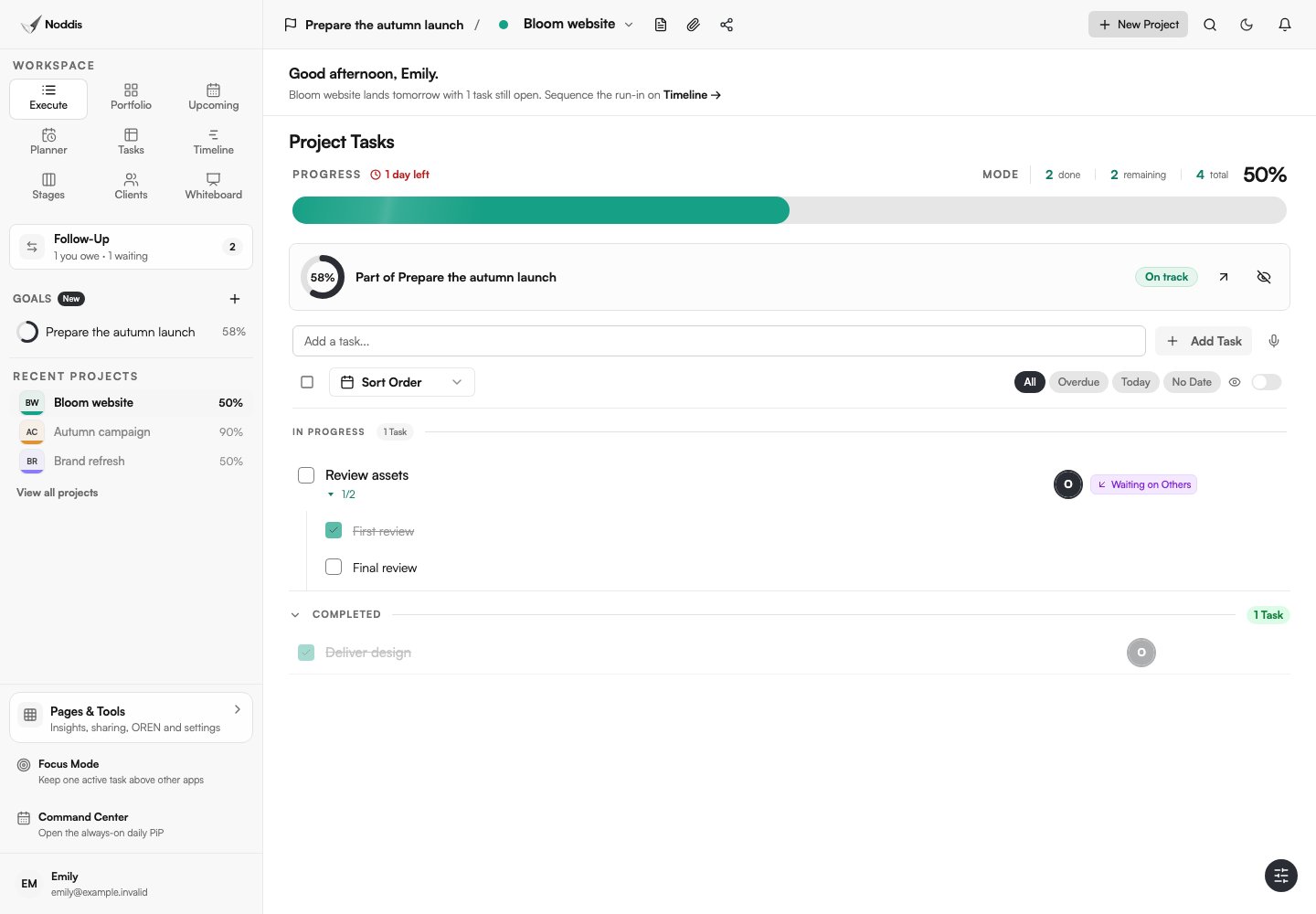
Noddis is a project management app connecting client work and its context. Keep the acceptance checklist or approved-version link with the relevant project task, and track pending sign-off as a Follow-Up when someone owes a response. Noddis does not automatically create legal acceptance documents. You can see its workspaces in the live demo.
Your next step
Add acceptance criteria to the next deliverable before it is produced. Finishing becomes easier to verify when everyone already agrees what finished means.
Common questions
Can a project be complete before the client approves?
Internal work can be complete while client acceptance is pending. Track both states. Closing the implementation task may be appropriate, but the approval commitment must remain visible until the decision arrives.
Should every small task require a formal sign-off?
No. Use acceptance decisions at the level justified by the agreement and the consequences of a mistake. For a simple social asset, a brief approval may suffice. A large website launch may need documented milestone and final acceptance.
Is a checklist enough for contractual acceptance?
The checklist supports verification. The contract determines the required form of acceptance, including any sign-off, testing period, or legal requirements. Use the authorized process rather than assuming the checklist alone changes contractual rights.

Katleen is the founder of Noddis. She runs client projects through her app studio, 693 Labs, and builds Noddis around the problems that work creates.
Last reviewed . Feature details reflect Noddis at the time of review.