
Short answer
A project scope baseline is the approved starting definition of what a project will deliver, what is excluded, and how success will be accepted. For a freelancer or small studio, the baseline can be one clear page. It should contain enough detail to classify later requests without turning the project into a paperwork exercise.
Free resource
Download the blank project scope baseline spreadsheet. No account is required. Save a copy before adding your project details.
What is a project scope baseline?
A project scope baseline is the point of reference used to determine whether later work is part of the original agreement or a change. It is not a promise that requirements will never evolve. It is the agreed starting line against which changes can be measured.
The Project Management Institute describes baseline control as requiring documentation and management approval for changes. A small client project needs the same clarity, though usually with fewer formal roles and documents.
One-page project scope baseline template
Use these fields in a statement of work, kickoff brief, or approved project note. The example describes a fictional Orbit Bikes campaign website.
| Field | Example |
|---|---|
| Project purpose | Publish a campaign microsite for a new product release |
| Included deliverables | Landing page, product details page, contact form |
| Excluded work | Ecommerce checkout, additional languages, photography |
| Content owner | Orbit Bikes marketing lead |
| Design review | Two consolidated review rounds |
| Acceptance condition | Approved copy and layout; tested forms; agreed mobile QA |
| Target milestones | Draft, review, build, QA, launch |
| Client approver | Named marketing lead |
| Change procedure | Written estimate and authorization before additional work |
| Reference version | Baseline v1, approved Oct 30, 2026 |
The actual deliverables and dates should reflect the signed agreement. This sample is an educational template, not a substitute for legal drafting.
How specific should deliverables be?
Specific enough that two people would reach the same conclusion about whether the item was delivered. “Build a website” is not a usable deliverable definition. “Design and build three named pages, one contact form, and a mobile navigation menu” is more testable.
Include file formats, environments, and acceptance criteria when they affect the output. A logo package might need SVG, PNG, and a usage sheet. A website launch may require tested redirects or accessible form labels. If the deliverable can be interpreted several ways, clarify it before pricing and scheduling the work.
It is equally important to list exclusions. “Photography not included” prevents an assumed photoshoot from quietly appearing during build. Write exclusions in ordinary language, with options for quoting additional work later.
How do revision rounds fit into the baseline?
Define what counts as a round, who consolidates comments, and which stages are open to review. For example, “Two rounds of design feedback on the approved homepage concept” is clearer than “Two revisions.”
A correction that brings work up to agreed acceptance criteria is not automatically the same as a discretionary redesign requested after approval. Classify requests against the actual terms rather than applying a rigid universal rule. The out-of-scope guide gives language for discussing work that does not fit the baseline.
What happens when scope legitimately changes?
Create a change record that names the requested outcome, estimated cost, schedule impact, and approver. Once authorized, add it as a new scope version or approved amendment. Keep baseline v1 available. You want to compare original work plus approved changes, not continually revise history.
A change decision should also update operational work: new tasks, dependencies, dates, and owner assignments. However, a new task in your project system does not by itself prove client authorization. Make the decision record discoverable.
How do you explain the baseline without sounding rigid?
Describe it as a shared reference point that protects both sides. It gives the client confidence about what they are paying for and gives the team a basis for estimating changes openly.
Here is the version of the project scope we are starting from. If a new idea comes up, we can absolutely look at it. We will compare it with this baseline, explain any effect on cost or timing, and get agreement before adding it.
This approach leaves room for collaboration without treating every idea as included by default.
Where does Noddis fit?
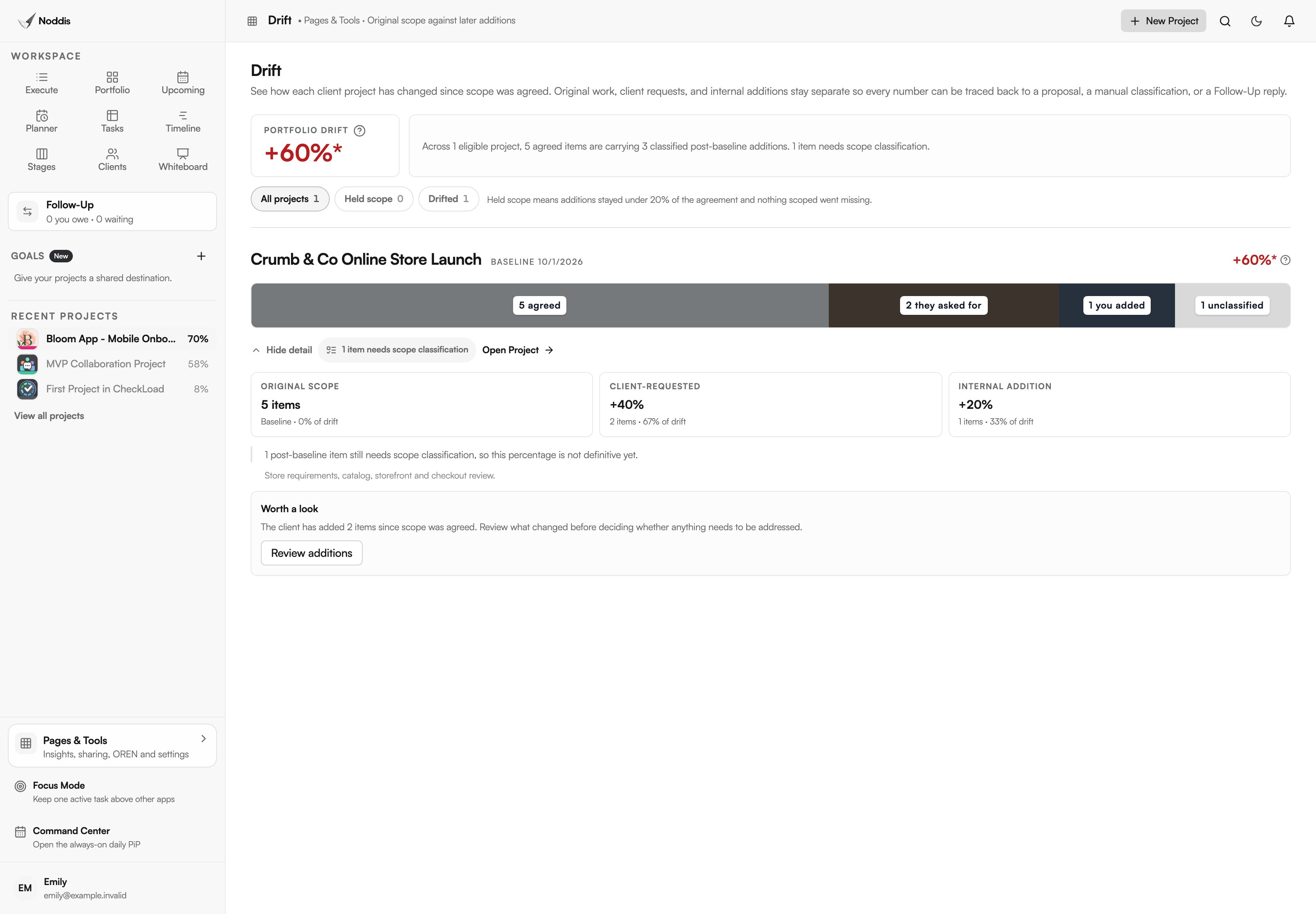
Noddis is a project management app that keeps project work, notes, follow-ups, and history connected. Use the baseline in the project's context and link approved change decisions to relevant work. Noddis Drift measures growth relative to an established scope baseline, which can support a more concrete conversation about added work. It does not replace contractual approval. See the client project tracker for the operational overview or explore the demo.
Your next step
Before starting your next project, ask a colleague to read the baseline and identify the deliverables, exclusions, reviewer, and acceptance conditions. If they have to guess, clarify those items now.
Common questions
Do small freelance projects need a formal scope baseline?
They need a clear agreed scope, though it may be a concise signed proposal rather than a complex formal document. The level of detail should match the ambiguity and risk of the work.
Should the baseline include budget and schedule?
Include or reference the agreed fee, milestones, dependencies, and terms that affect the work. They are connected to scope, even when maintained in separate contract or schedule documents.
Can the client change the baseline after approval?
Yes, by following the agreed change process. Preserve the original and record the authorized change so both parties can understand the evolution of the project.

Katleen is the founder of Noddis. She runs client projects through her app studio, 693 Labs, and builds Noddis around the problems that work creates.
Last reviewed . Feature details reflect Noddis at the time of review.