
Short answer
A freelancer vacation handoff works best when the client can see the last day for feedback, the version under review and what delivery is possible on either side of that cutoff. Offer a place to leave late comments and a date for picking them up when you return.
What belongs in a freelancer vacation handoff?
An editor sends a cut on Monday and leaves on Friday morning. The client usually takes four days to gather feedback. A Thursday-night reply would leave no time to make changes, export a new file or check the captions.
Count the time you need after a reply. If one revision needs half a working day and the final check needs another hour, Thursday morning may be the last useful feedback slot. Give the client that time and timezone alongside the review link.
How much time do you actually have for revisions?
An editor who leaves on Friday might have Thursday available for revisions but need Friday morning for sound checks, captions and delivery. A Thursday-evening feedback deadline offers the client a day the editor cannot use. Write down the hours each remaining pass will take and work backward from the final check.
Show the times in the client’s time zone. In a shared review link, label the cut by version and date. Someone who saw a rough preview last week can otherwise lose half a day leaving notes on footage that has already changed.
| Remaining job | Input to agree before leaving |
|---|---|
| Revise the edit | One set of time-coded notes from the named reviewer. |
| Deliver the export | Final file specification and someone authorized to release it. |
| Pick up late feedback | A review link and the first available editing block after the break. |
Give the client two workable outcomes
“If I receive one set of notes by Thursday at 10 a.m. Mountain time, I can send the revised cut before I leave. Later feedback will be the first item I review on Tuesday, November 17.” These are dates the client can plan around.
If a colleague can help, specify which changes they can approve. A spelling correction and a new sequence may need different people. Obtain permission before sharing client material with anyone who was outside the original project.
What should the client hear before you sign off?
Try this email for a short film. “The review cut is at this link. If Jules sends one set of time-coded notes by Wednesday at noon Pacific, I can deliver the revised cut on Friday. Notes after that go into my first editing block on Monday the 18th. Would you like to use the Friday slot?”
Name the person who can collect feedback from the other viewers. If the marketing director is traveling too, ask whether someone else has authority to sign off. A substitute who can gather comments but cannot approve the final cut can help with one stage only.
What can a colleague safely pick up?
Imagine a colleague opens the job on your second day away. They need the approved version, the link to the source material, the name of the reviewer and the boundary of their responsibility. “Send the approved export if the captions pass” gives them something they can finish. “Cover this account” leaves the entire project with them.
If you work alone, the same note is for your first morning back. Start with the promised reply, compare any comments with the reviewed version and tell the client which change will happen first. A return date is much easier to honor when that first decision is already visible.
Give your future self a handoff
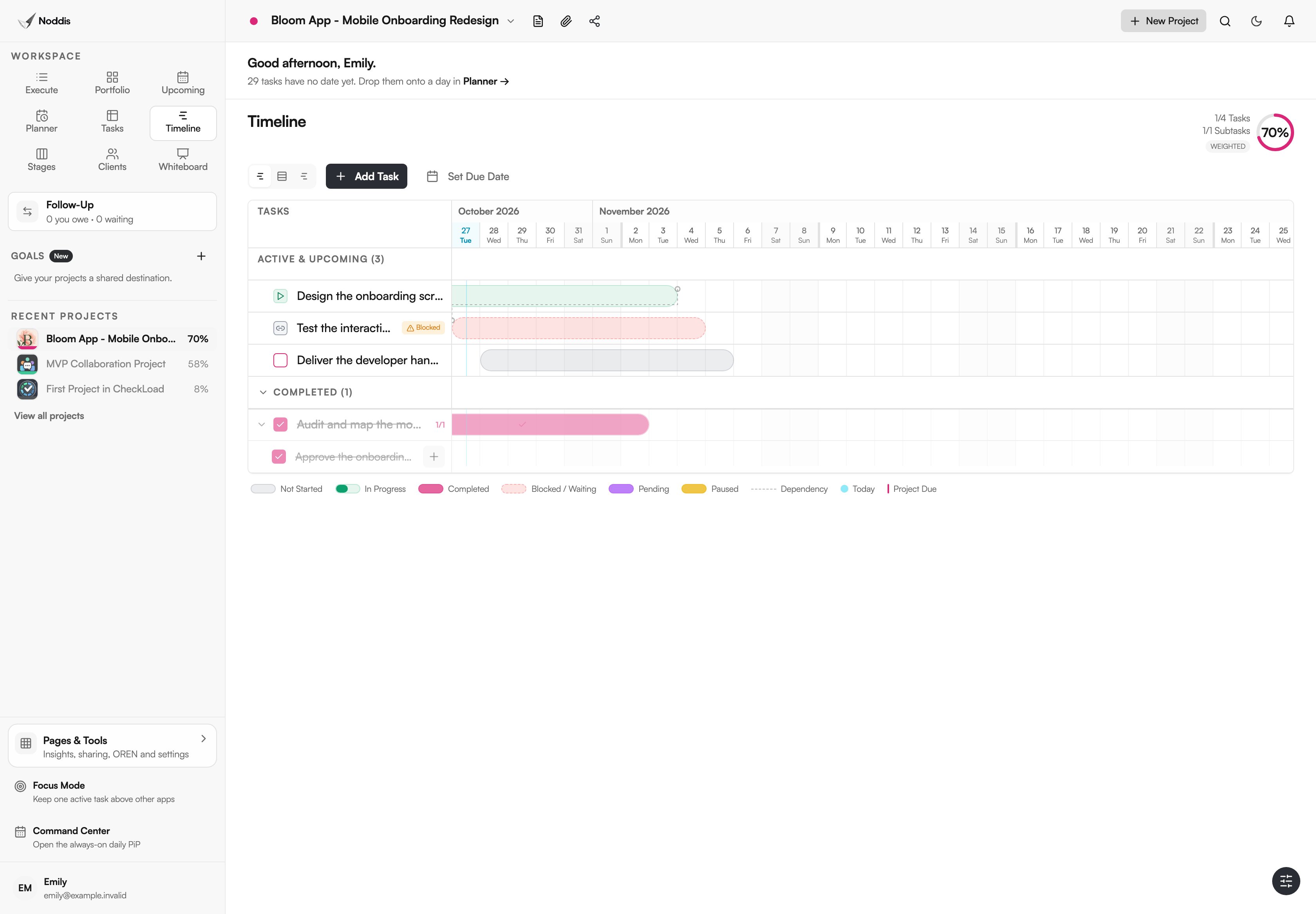
Add the review link and cutoff to Project Notes in Noddis. Put the revision and final check into Execute as separate tasks. Record the expected reply in Follow-Up and check Upcoming for deadlines that fall during the break.
On your first morning back, open the specific project and read the decision beside the file version. A useful handoff tells you whether to make changes, request clarification or send the approved cut. It saves the time you would have spent piecing those facts together from your out-of-office inbox.
For the next step, see How to Schedule Client Review Windows in a Project and Task Handoff Checklist for Freelancers and Remote Teams.
Sources and field notes
A freelance editor raised the problem of an unresponsive client shortly before vacation. Read the original source.
Google documents how out-of-office events decline meeting requests.
Common questions
Should I mark the work complete before I leave?
Complete the delivery task when you send the review version. Keep approval and final delivery open until they happen. Leave a link to the version that still needs review. Record who owns the decision and the date you will next check for it.
What if I have no one covering me?
State when you return and which work resumes then. A clear restart date is more dependable than promising occasional replies during your break. Tell the client which work you can complete before leaving and which work resumes after your return. Put the next update date in the same message.
What if feedback comes in during my vacation?
Give people somewhere to leave it. Your out-of-office message can point to the review link and repeat your return date. Only arrange coverage for work a specific person has agreed to take. Give the person covering the project a clear boundary around the decisions they can make on your behalf.

Katleen is the founder of Noddis. She runs client projects through her app studio, 693 Labs, and builds Noddis around the problems that work creates.
Last reviewed . Feature details reflect Noddis at the time of review.