
Short answer
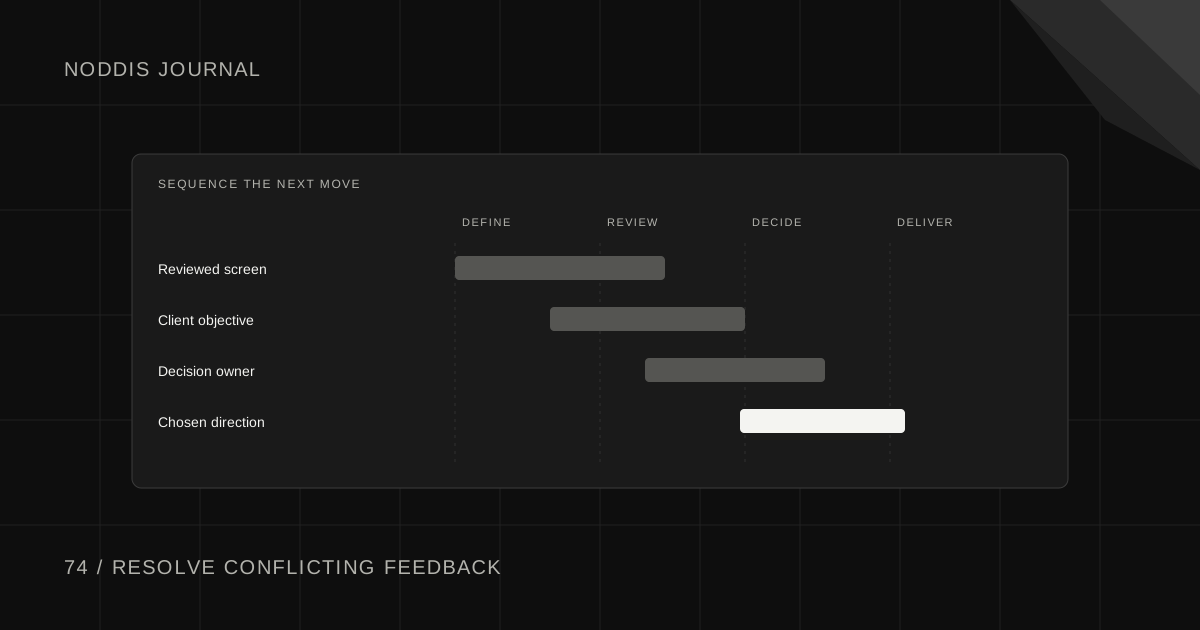
To resolve conflicting design feedback, put the two requests next to the same element and ask what each is supposed to achieve. Give one authorized person a choice with clear consequences. Record their answer with the file version before the designer spends another revision round trying to satisfy both requests.
Which conflicting design feedback needs a decision?
One reviewer wants a quieter landing page. Another asks for a larger promotional banner and a second call to action. A task called “incorporate all feedback” leaves the designer to negotiate the conflict inside the file.
Name the exact element and the effect on the intended reader. The owner can now decide whether this page should help returning customers find their login or persuade new visitors to book a consultation. Both can matter to the business while requiring different page priorities.
Are the reviewers even looking at the same thing?
A sales lead says the home page needs a prominent phone number. A marketing lead says it already has too many calls to action. Before opening the design file, check the link and device behind each comment. A phone number visible in the desktop header can disappear inside a mobile menu. Both people might be describing what they actually saw.
Put a screenshot of that screen in the review thread, with the version and viewport. Invite each reviewer to point at the element they mean. If both want a mobile visitor to reach sales quickly, the design problem has become specific enough to solve.
| Question | Example answer |
|---|---|
| Where is the conflict? | Mobile header, proof three, before the visitor scrolls. |
| What does each person want? | Sales wants a call. Marketing wants visitors to start the demo. |
| What will the owner decide? | Which action gets the primary button for this launch. |
Send a decision the owner can answer
Give the owner the version link, the two proposed treatments and the consequence of each. Keep the request small enough to answer in a sentence. “For the first screen, should booking a consultation or reaching the login receive the primary button? I recommend booking because this campaign sends new visitors.”
If the owner wants evidence from users, agree on the test and its deadline. That creates a research task with an endpoint. It also gives you a reason to defer the final layout decision without letting an open argument stall every other page.
How do you turn opposing opinions into a useful choice?
Write the consequence in language the client would use. “A persistent call button gives a ready-to-buy customer immediate access. Keeping the product demo as the only primary button gives a first-time visitor a clearer starting point. Which visitor is this page for at launch?” That question earns a more usable answer than asking which design feels cleaner.
Give the decision a deadline linked to the work. If the developer starts the mobile header on Thursday, say when they need the selected direction. An argument about aesthetics can run for a week unless someone can see what work is waiting for the answer.
What does the designer send after a decision?
A three-line recap is enough. Identify the page and version, say which audience won priority and name the implementation change. For example, the client might choose a demo-first header with a phone number on the contact screen. Send that recap to both reviewers so the next round starts from the same agreement.
If nobody owns the final choice, ask the project sponsor to name someone. Keep building independent parts while the question is open. Making two polished versions without an agreement about who will choose between them often just creates two more documents to review.
Start one revision from the answer
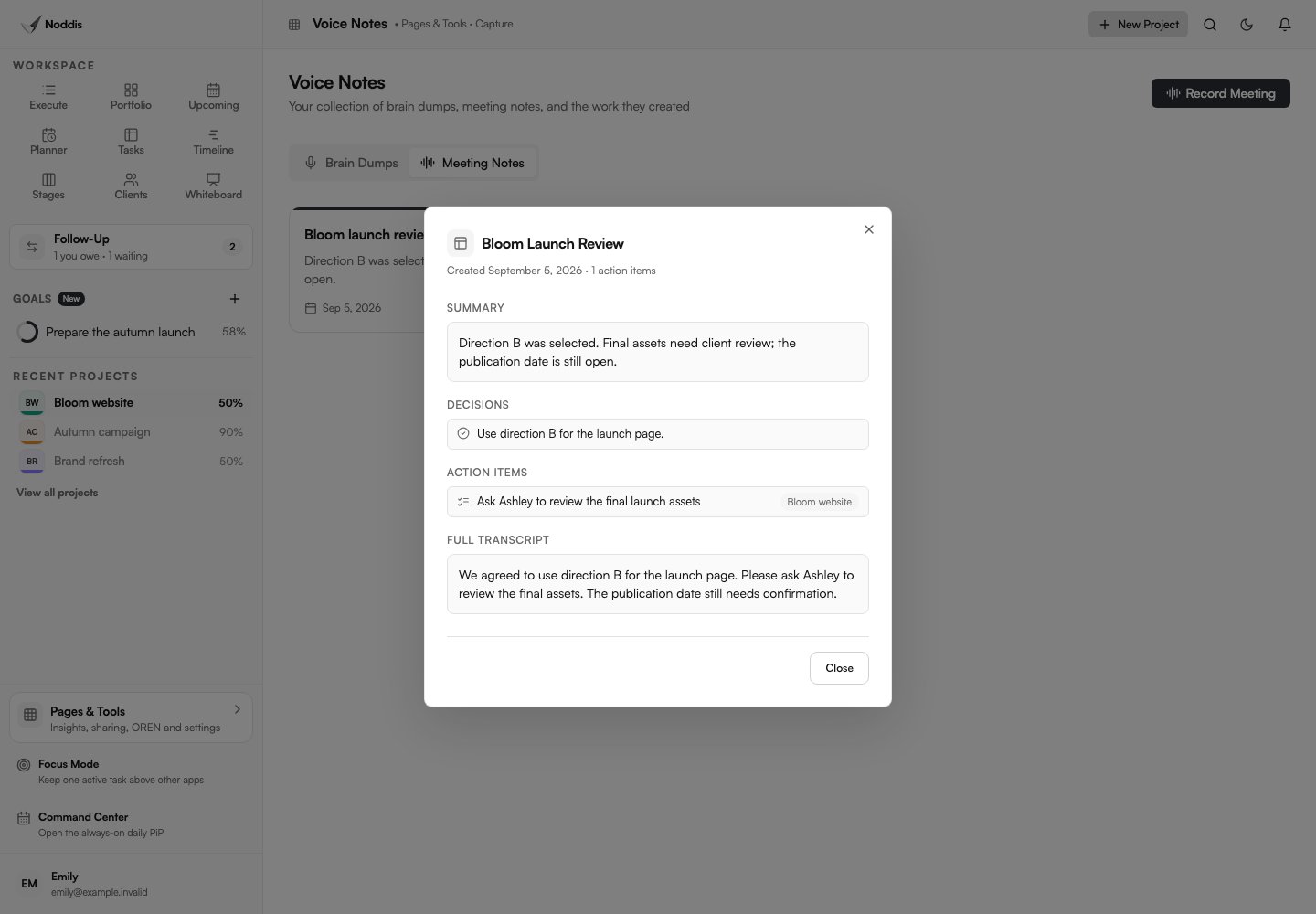
In Noddis, record the decision brief in Project Notes. Add “Choose the primary homepage action” to Execute and put the expected response in Follow-Up. Keep independent tasks such as checking the contact form moving.
When the client chooses, write the decision next to the file version and close the decision task. Create the implementation task with the chosen treatment in its title. A reviewer joining later can follow the reasoning without asking the designer to reconstruct the call.
For the next step, see How to Collect Client Feedback in One Place and Client Approval Tracking: Stop Feedback From Delaying Delivery.
Sources and field notes
A brand designer describes how additional voices complicated a previously aligned project. Read the original source.
A Reddit designer describes receiving opposite instructions on one design.
Common questions
Should I build both versions?
Do that when comparing versions is part of the agreed review. Otherwise give the owner a small decision first and agree on the cost of a second treatment. A rough side-by-side is enough to compare the consequences. Ask the owner to pick an option before you spend time producing two complete sets of deliverables.
Where do I put the unchosen suggestion?
Keep it with the decision notes so the team can revisit it if the goal changes. Give only approved work a place in the execution plan. Keep the suggestion with the reviewed version and the reason the owner chose a different direction. A future team can revisit it if the audience or launch goal changes.
What if nobody will make the final choice?
Ask the project sponsor to name the person who can accept the outcome. Give that person the two options, the goal and the date their choice is needed. Keep independent work moving while the decision is open and tell the client which deliverable is waiting.

Katleen is the founder of Noddis. She runs client projects through her app studio, 693 Labs, and builds Noddis around the problems that work creates.
Last reviewed . Feature details reflect Noddis at the time of review.