
Short answer
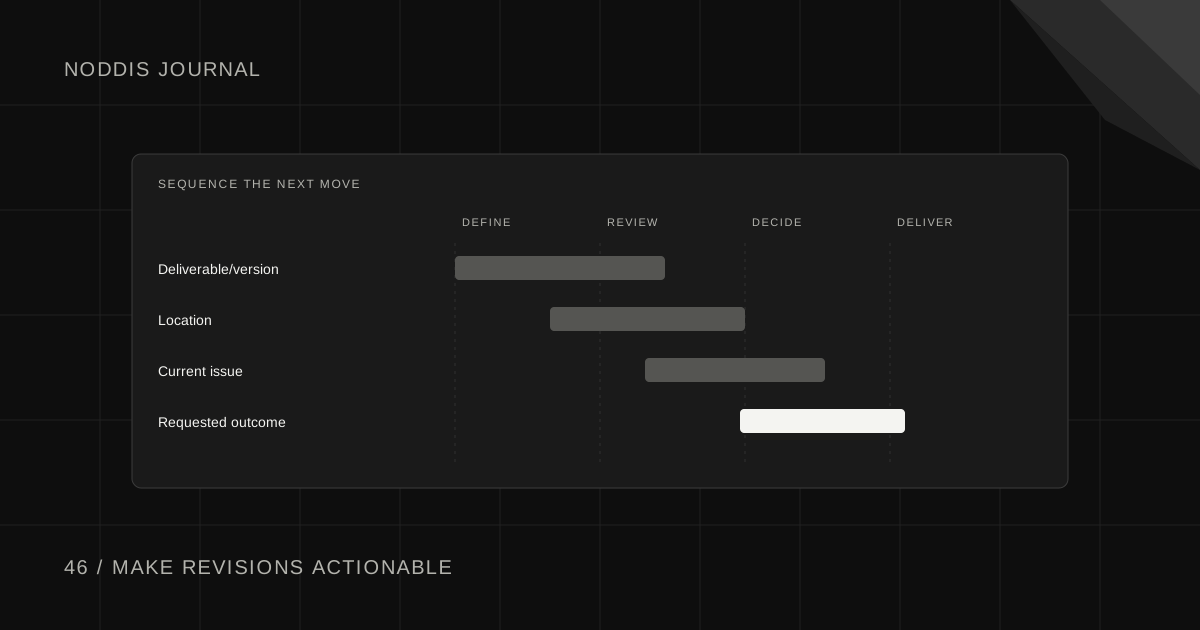
A client revision request form collects changes to an existing deliverable, not brand-new assignments. It should capture the exact version, location of the issue, desired change, reason, supporting example, and one approved reviewer. A structured revision form reduces guesswork and makes it easier to distinguish included corrections from extra scope.
Free resource
Download the blank revision request form spreadsheet. No account is required. Save a copy before adding your project details.
When do you need a revision form instead of an intake form?
Use a revision form when a client has reviewed work already delivered and wants specific changes to that work. Use a general intake form for new assignments, additional deliverables, or new projects. Mixing them makes it difficult to enforce revision allowances or estimate capacity.
For instance, a fictional client, Orbit Bikes, might ask to change the headline on an agreed product page. That is potentially a revision. Asking for a new comparison page is likely new scope. Both requests deserve attention, but they should not travel through the same approval shortcut.
The existing client request intake guide explains how new work enters a review queue. This guide focuses instead on making revision instructions accurate enough that a designer, writer, or developer can execute them without another meeting.
The client revision request form template
Copy these fields into a form, document, or shared table. Mark only the first five as required. Extra mandatory fields can make simple corrections unnecessarily difficult.
| Field | What the client supplies | Example |
|---|---|---|
| Deliverable and version | Exact item under review | Product page, v2 |
| Location | Section, page, timestamp, or screenshot | Pricing card, mobile view |
| Current issue | What appears wrong | Discount date is outdated |
| Requested outcome | What should be true after revision | Show approved offer end date |
| Reviewer | Person consolidating feedback | Marketing lead |
| Evidence | Link, approved copy, reference | Updated offer document |
| Priority | Why the timing matters | Campaign launches Friday |
| Suggested solution | Optional, not mandatory | Replace two-line caption |
Keep access to sensitive documents restricted. Never collect account passwords in a general-purpose form. Ask for secure access through the relevant provider's permission-sharing workflow instead.
A completed example
Deliverable: Orbit Bikes product launch page, v2. Location: Mobile pricing section. Issue: The launch-date label is outdated. Requested outcome: Display the currently approved launch date consistently on mobile and desktop. Approved source: Campaign calendar link. Reviewer: Marketing lead. Timing: Before launch QA.
This request identifies the problem, the authoritative answer, and how to verify completion. “Please fix the date” would have forced the team to guess.
How should you classify revision requests?
Review each submission before assigning work. The key distinction is whether the change is necessary to meet the already-agreed acceptance criteria or whether it adds a new outcome.
| Request | Likely classification | Follow-up |
|---|---|---|
| Correct an incorrect date against approved copy | Correction | Assign to deliverable owner |
| Adjust spacing during an included revision round | Included revision | Confirm round allowance |
| Add three additional social formats | Potential new scope | Estimate and approve |
| Rebuild a page after a new stakeholder changes direction | Re-scope / additional round | Discuss schedule and cost |
| “Make it feel more premium” | Unclear | Ask for concrete references |
These are illustrative classifications, not legal rules. The project agreement and acceptance criteria determine what was included. Refer to the out-of-scope request guide when a review turns into a scope decision.
How do you prevent feedback from arriving in five rounds?
Set one named reviewer, one review window, and one consolidated submission per agreed round. Allow comments to be drafted collaboratively, but have the reviewer confirm the final revision list before production resumes. If new comments arrive after the round closes, assess them as a new request rather than quietly inserting them.
Treat a batch of revisions as a snapshot. The team should know which version it applies to and what feedback was received at the cutoff. If the client changes direction midway, update the scope and schedule explicitly so the original work is not erased from the record.
Google Docs' comment and suggestion tools are one example of collecting contextual remarks, although a form is better suited to one-row-per-change reporting. A studio may combine the two: comments in the source file and an approved revision register for assignments.
What does a good revision handoff look like?
Before a revision task moves to a collaborator, include the source version, approved change, due date, reference link, and acceptance condition. The final criterion must be observable, such as “approved title appears correctly on desktop and mobile,” rather than “looks better.”
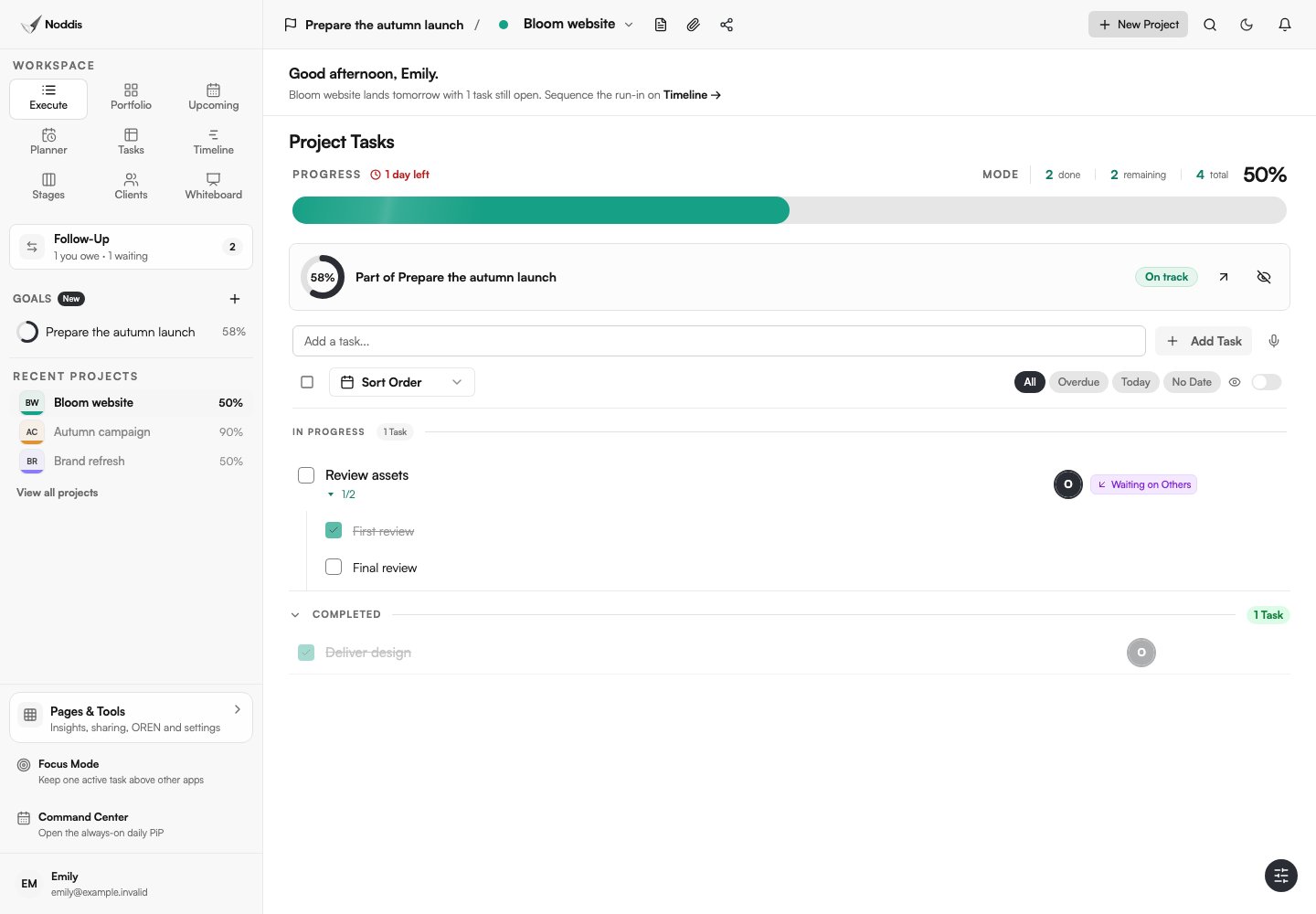
Noddis is a project management app for keeping tasks and project context together. Use a task for the approved change, attach or link its source, and record a Follow-Up commitment if a client decision is still outstanding. Keep annotations and version comparisons in the source design or document tool. Try the live demo to see how project work stays organized.
Your next step
Give your next reviewer this form alongside the deliverable link. A complete revision request is easier to estimate, delegate, and verify than a long thread of loosely connected comments.
Common questions
Should a client submit one form per comment?
One entry per distinct change is easier to assign and close. For a small set of closely related corrections, one grouped entry can work if a single person can verify the combined result. Preserve a link to the review version either way.
Can a client submit revisions after final approval?
They can request changes, but those requests may constitute new work depending on the agreement. Refer to the documented approval, define the new outcome, and confirm costs or dates before work begins.
What if the client cannot describe the technical fix?
Ask them to describe what is wrong and what result they expect. Solving the implementation is the service provider's job. A screenshot, example, or approved source document is usually more useful than an improvised technical instruction.

Katleen is the founder of Noddis. She runs client projects through her app studio, 693 Labs, and builds Noddis around the problems that work creates.
Last reviewed . Feature details reflect Noddis at the time of review.