
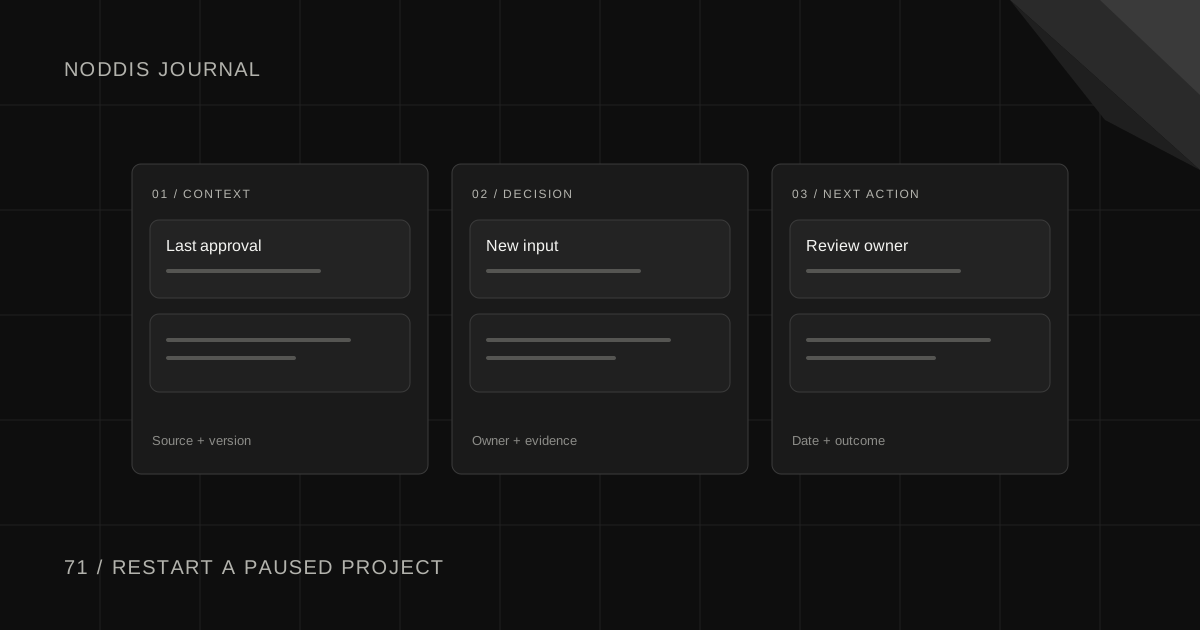
Short answer
To restart a paused client project, open the last approved version and ask what changed while it sat. Offer a date you can meet alongside your current bookings. If the client needs something sooner, agree on the smallest useful delivery and get the new scope and reviewer in writing.
How do you restart a paused client project without moving every deadline?
A client goes quiet after the first website review. Eight weeks later the missing copy arrives with a request to launch on Friday. Your old plan still shows two days of build work. Since the pause, another client has booked those two days and the original reviewer has left.
Open the project record before answering. Find the last version the client saw, the decision that was outstanding and the person who could approve it. Mark finished work as finished. A restart should leave a readable trail back to the earlier agreement.
What changed while the project was on hold?
Make a little before-and-now record. On the left, put the approved home page, the old contact and the copy you expected. On the right, put the file that arrived today, the person who can approve it and any new launch commitments. Read the changed rows aloud with the client. A new paragraph is a revision. A new audience may reopen the design.
Suppose the first page was for wholesale buyers and the new copy speaks to individual shoppers. Replacing the words alone would leave a wholesale inquiry form on a retail page. Ask which buyer the page must serve before spending a morning fitting the new words into the old layout.
| Client reply | What you can commit to |
|---|---|
| “The approved layout still works.” | Offer the next production slot for the copy and mobile checks. |
| “We have a different audience now.” | Book a brief review before estimating layout changes. |
| “We only need a working sign-up page for Friday.” | Scope a standalone registration page and test the sign-up from a phone. |
Run a three-question restart
Ask whether the approved design still stands, whether anyone new must review it, and whether the intended launch date has an external consequence. A trade show gives you a different scheduling decision from a preference for Friday.
Offer a specific first slot and a smaller deliverable if appropriate. For example, “I can review the new copy on Tuesday. If the approved layout still holds, I can send the revised page on Thursday. Please confirm who can sign it off.” Wait for the answer before committing dependent work.
What can you offer when Friday really matters?
Ask what someone needs to be able to do on Friday. If the client is printing a QR code for an event, a working registration page might be enough. Give that page a delivery slot, a test on an actual phone and a person who can approve the final text. The full site can keep its own date.
If only a complete launch serves the purpose, show the earliest date for the whole thing. Don’t trade away another client’s booked slot in the middle of the call. Send two lines afterwards stating the chosen deliverable and the next input. Wait for the choice before promising either date.
A restart note you can reuse
“Thanks for sending the copy. We paused with the desktop layout approved and mobile review open. I can reopen the project on Tuesday. Is Jordan still the final reviewer, and is the registration page the only piece you need for the event? I’ll confirm the delivery date once I have those two answers.”
Keep the note short enough that the client can answer on a phone. If the reply only answers one question, keep the other open. That small distinction saves you from reporting that the project has restarted when you still don’t know who can accept the work.
Rebuild the next week in Noddis
In Project Notes, record the pause, the link to the approved version and the new decision. In Execute, give the first unfinished task a date only after the client confirms it. Use Upcoming to check that date against the other projects you accepted during the gap.
Create one Follow-Up for the missing confirmation and name the person who owes it. When the reply lands, close that follow-up and update the task. Someone opening the project next week should be able to explain the new date from the record.
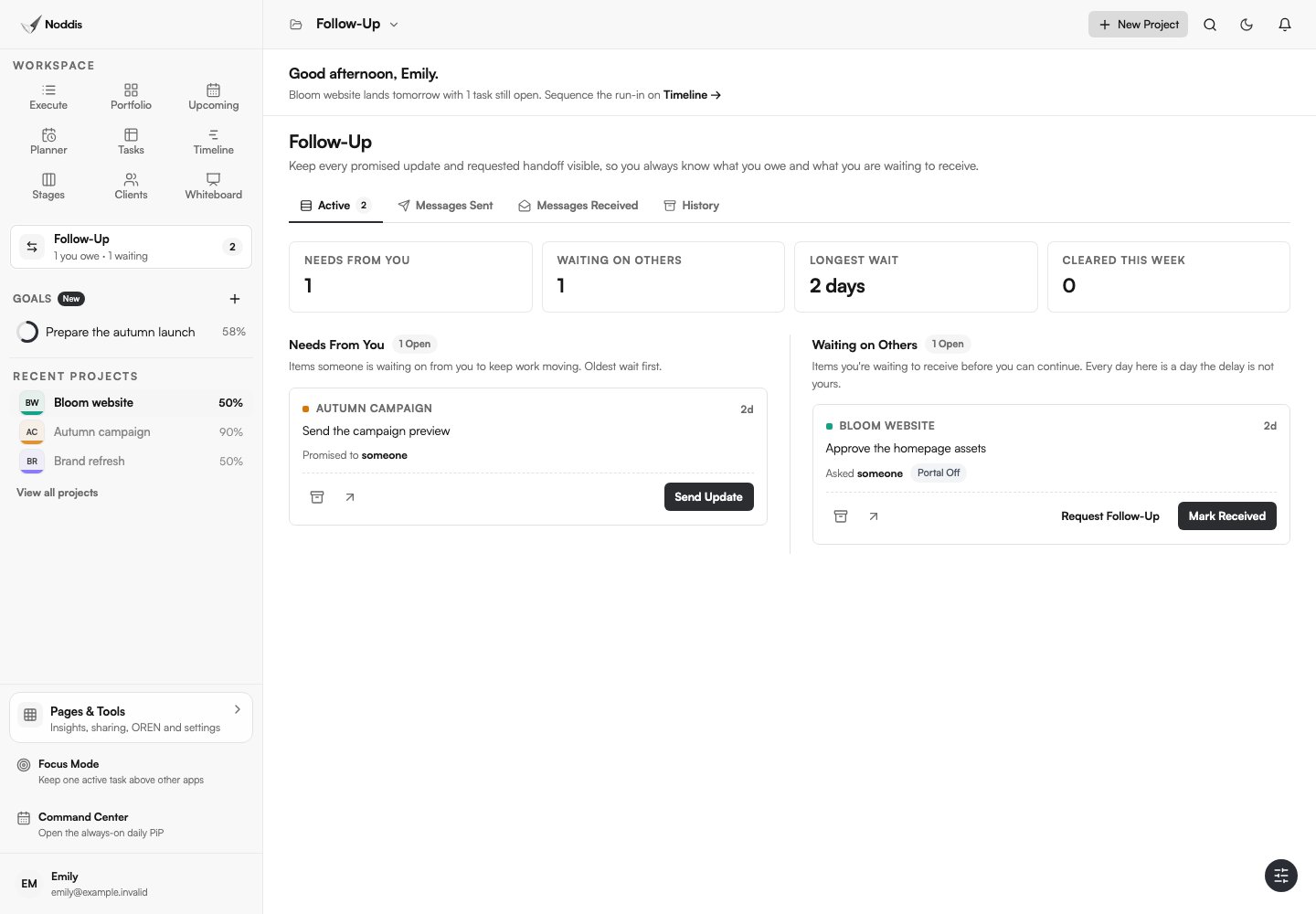
For the next step, see How to Recover a Delayed Client Project and How to keep track of client follow-ups without keeping them in your head.
Sources and field notes
A freelancer described a client returning after two months with an urgent deadline. The restart example above is illustrative. Read the original source.
Common questions
Should I move every overdue task to today?
Review the first dependency and the current production slot first. Bulk moving dates can make unfinished work appear due before its inputs are available. Reschedule the first piece of work you can actually start. Move dependent dates when the client confirms the input or review slot they depend on.
What if the client changed the brief during the pause?
Keep the earlier approval and record the requested change separately. Confirm the revised scope and timing before reopening the affected tasks. If the audience changed during the pause, point to one affected page and ask the client to confirm the new audience before revising the rest.
Do I need a new kickoff meeting?
If the audience, approver and deliverable are the same, a written restart note may be enough. Use a short meeting when a changed requirement affects a decision several people have to make. Send the last approved proof in advance. Let the client identify anything else that changed while the work was paused.

Katleen is the founder of Noddis. She runs client projects through her app studio, 693 Labs, and builds Noddis around the problems that work creates.
Last reviewed . Feature details reflect Noddis at the time of review.